Sleep Hygiene in Advanced Illness: Combating Insomnia and Fatigue
Introduction
Sleep disturbances are highly prevalent in patients with advanced illness, affecting up to 60–80% of individuals in palliative care settings. Insomnia, fragmented sleep, and daytime fatigue can significantly impair physical comfort, emotional well-being, and overall quality of life. These disturbances are often multifactorial, arising from pain, medications, psychological distress, environmental factors, and disease progression.
In advanced illness, poor sleep not only worsens fatigue but also amplifies symptoms such as pain, anxiety, depression, and cognitive dysfunction, creating a distressing cycle. Therefore, addressing sleep disturbances becomes an essential component of holistic palliative care.
Sleep hygiene refers to a set of behavioral and environmental practices that promote better sleep quality. In the context of advanced illness, a gentle, individualized approach is required—focusing on comfort, practicality, and patient preferences rather than rigid rules.
Common Causes of Insomnia in Advanced Illness
- Pain and physical discomfort
- Anxiety, depression, or existential distress
- Medications (e.g., steroids, NSAIDs, Opioids)
- Nocturnal symptoms (dyspnea, cough, urinary frequency)
- Environmental disturbances (noise, hospital setting)
- Daytime inactivity and excessive napping
Principles and Goals of Sleep Hygiene in Palliative Care
Principles
- Patient-centered approach: Tailor sleep strategies according to patient comfort, preferences, and disease condition
- Symptom control first: Address underlying causes such as pain, dyspnea, anxiety, and nocturia
- Gentle and flexible approach: Avoid rigid sleep rules; adapt to patient’s daily rhythm
- Holistic care: Consider physical, psychological, social, and spiritual factors affecting sleep
- Minimize burden: Use simple, non-invasive interventions
- Multidisciplinary care: Involve doctors, nurses, caregivers, and family
- Balance rest and activity: Encourage daytime activity while avoiding excessive fatigue”
Goals
- Improve sleep quality and duration
- Reduce insomnia and nighttime awakenings
- Decrease daytime fatigue and drowsiness
- Enhance overall comfort and quality of life
- Reduce anxiety and psychological distress
- Prevent worsening of symptoms like pain and confusion
- Promote a sense of rest, peace, and well-being
In palliative care, sleep hygiene should be simple, flexible, and comfort-focused, tailored to the patient’s condition and preferences.
Approach to Management of Insomnia in Advanced Illness
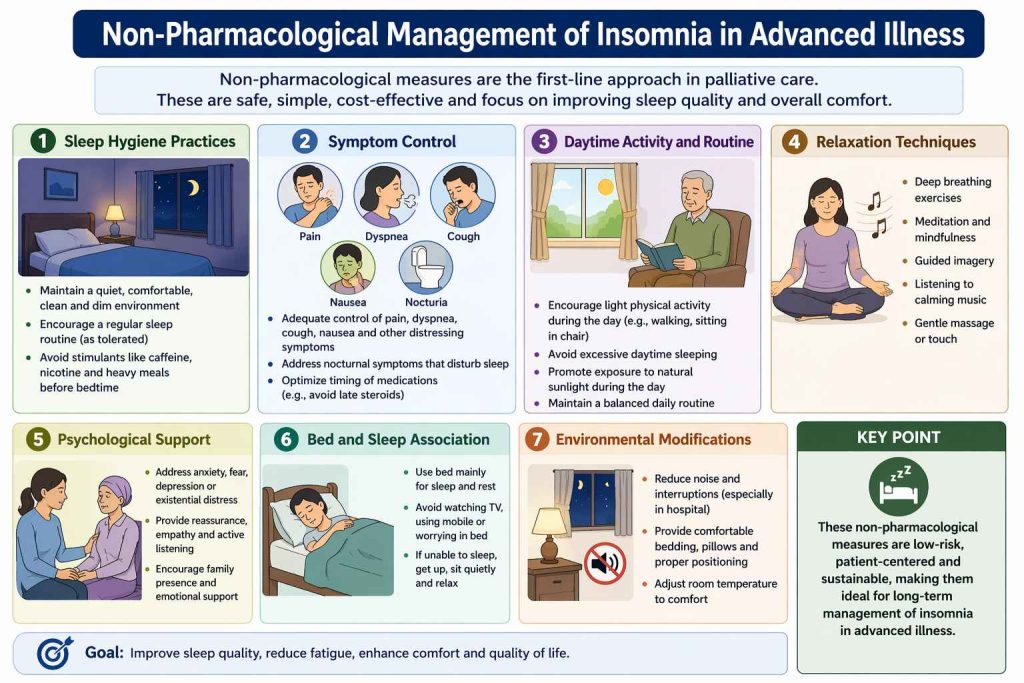
Management of insomnia in advanced illness requires a holistic and stepwise approach, focusing on identifying and addressing reversible causes while ensuring patient comfort. Since sleep disturbances are often multifactorial, treatment should begin with assessment of physical, psychological, and environmental factors contributing to poor sleep. In palliative care, the emphasis is on simple, low-burden interventions, with non-pharmacological measures forming the cornerstone of management. Pharmacological therapy is reserved for patients with persistent or severe symptoms.
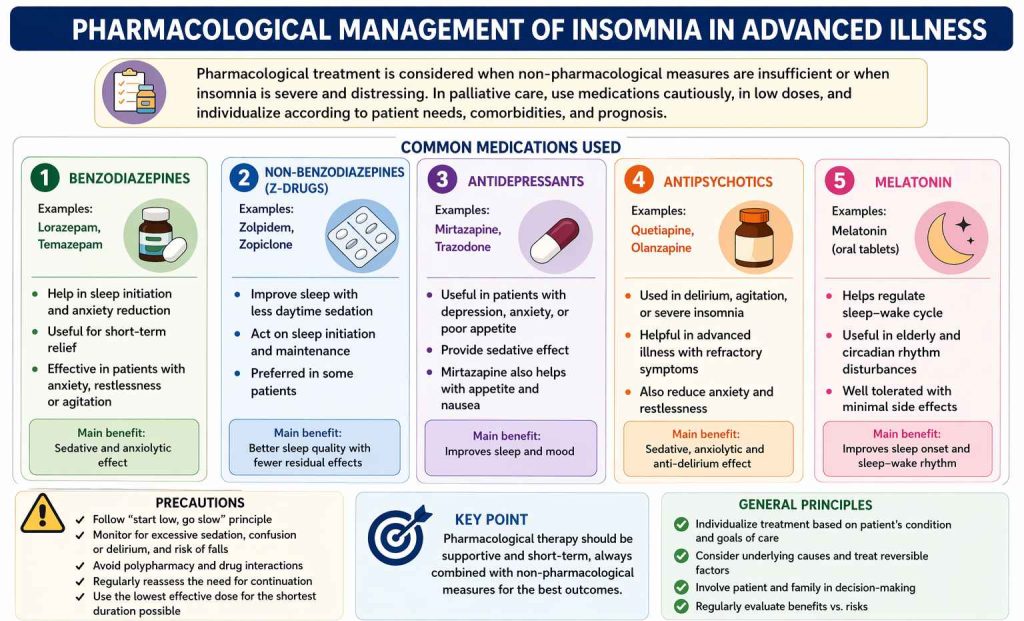
Pharmacological Management of Insomnia in Advanced Illness
Pharmacological treatment is considered when non-pharmacological measures are insufficient or when insomnia is severe and distressing. In palliative care, medications should be used cautiously, in low doses, and individualized according to patient needs, comorbidities, and prognosis.
Do's
- Maintain a quiet, comfortable, and dim sleep environment
- Encourage regular sleep routine (as tolerated)
- Manage pain and other symptoms before bedtime
- Promote relaxation techniques (music, breathing, meditation)
- Encourage light daytime activity
- Provide emotional and psychological support
- Adjust medications that may disturb sleep
Don'ts
- Avoid caffeine, nicotine, and heavy meals at night
- Do not allow excessive daytime sleeping
- Avoid bright lights and noise at night
- Do not use bed for stressful activities
- Avoid overuse of sedative medications
- Do not ignore underlying causes (pain, anxiety, dyspnea)
- Avoid rigid sleep rules that burden the patient