Emergency Kits for Home Palliative Care: What to Keep Handy
Home-based palliative care allows patients with serious illness to remain in a familiar and comfortable environment while receiving supportive care. However, sudden symptoms such as pain crises, breathlessness, agitation, seizures, bleeding, or vomiting can occur unexpectedly and cause significant distress to both patients and caregivers. In these situations, timely access to essential medications and supplies becomes crucial.
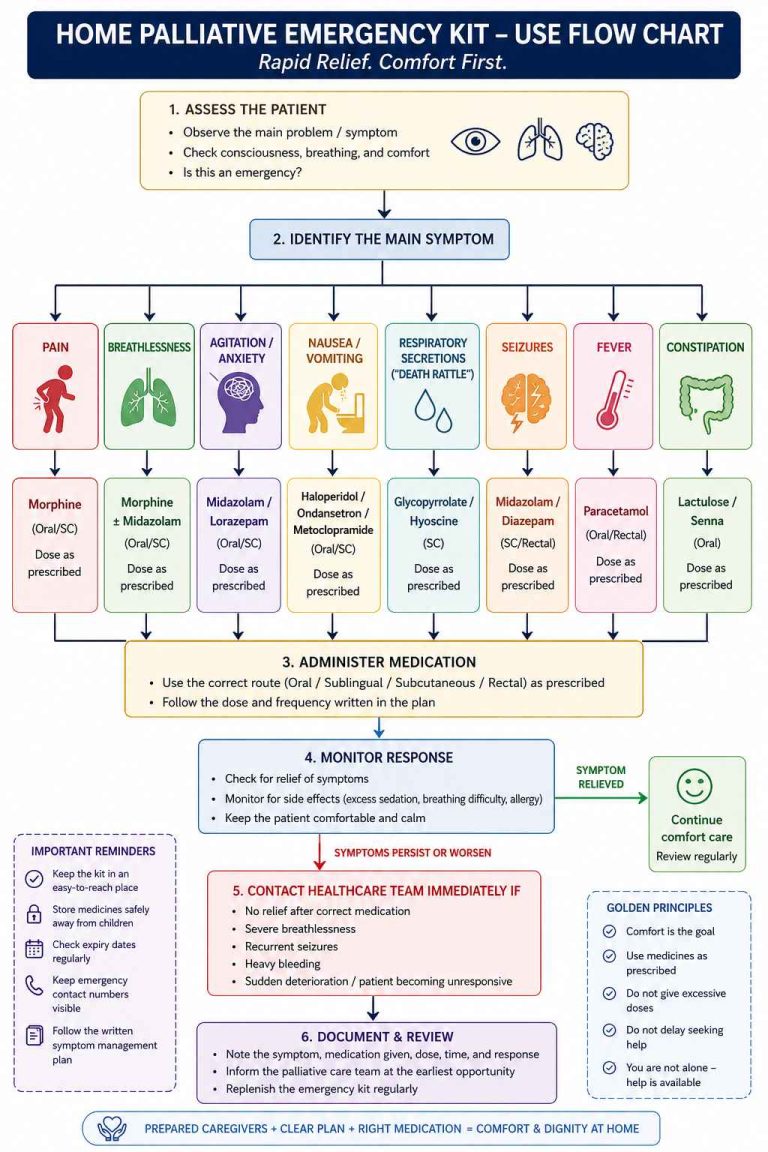
An emergency kit for home palliative care is a pre-prepared collection of medications, equipment, and instructions designed to help caregivers manage common emergencies until professional medical help is available. These kits improve symptom control, reduce panic, minimize unnecessary hospital visits, and provide families with a sense of preparedness and confidence.
In palliative care, the aim of emergency preparedness is not aggressive intervention, but rapid comfort-focused management that aligns with the patient’s goals of care and dignity.
Why Are Emergency Kits Important?
- Provide rapid symptom relief
- Reduce emergency hospital admissions
- Help caregivers respond confidently
- Prevent unnecessary suffering
- Improve continuity of home care
Anticipatory Symptoms in Palliative Care
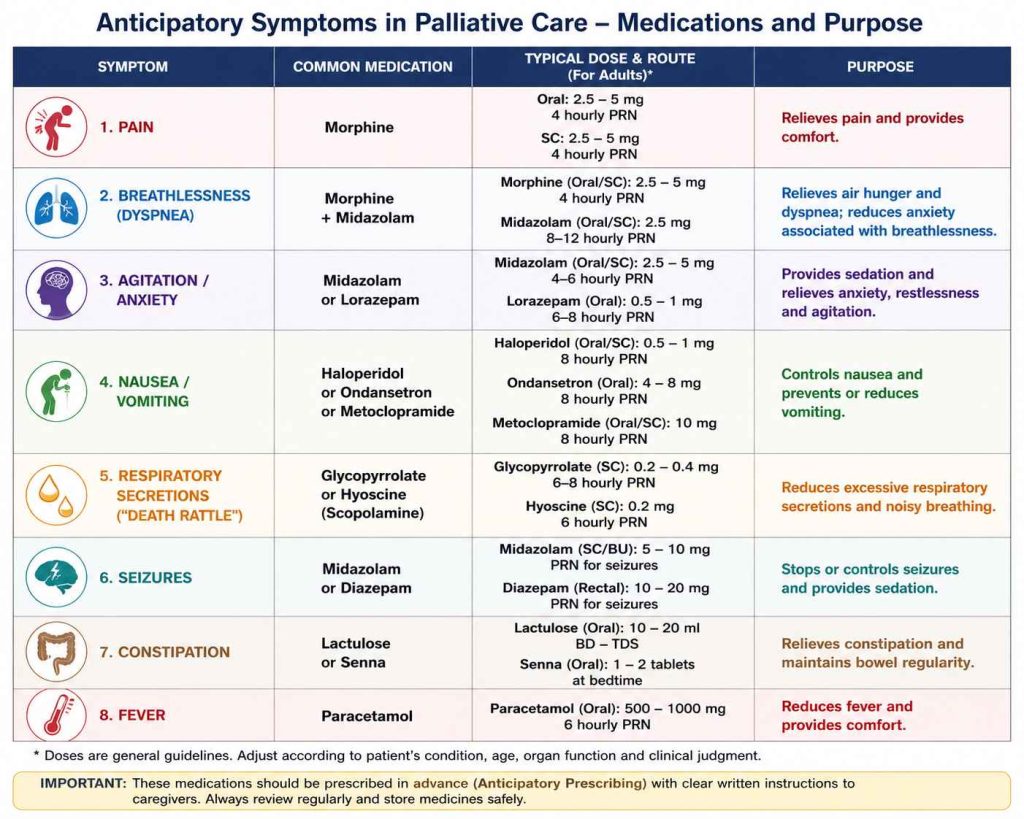
Anticipatory symptoms are predictable symptoms or emergencies that are expected to occur in patients with advanced illness, especially near the end of life. In palliative care, medications are often prescribed in advance (“anticipatory prescribing”) so that symptoms can be treated quickly at home without delay.
Why Anticipatory Prescribing is Important
- Prevents unnecessary suffering
- Provides rapid symptom relief
- Reduces emergency hospital visits
- Increases caregiver confidence
- Supports home-based end-of-life care
What is Anticipatory Prescription?
Anticipatory prescription means Prescribing injectable or oral medications before symptoms occur, so caregivers or healthcare professionals can use them immediately when needed.There is no single universal WHO or ESMO “standard emergency kit” list, but both organizations strongly recommend that home palliative care should have essential symptom-control medications readily available, especially for end-of-life care and community/home settings. Medication includes according to patients’ condition, disease status, current symptoms and anticipatory symptoms.
Essential Components of a Home Palliative Emergency Kit
A home palliative emergency kit should contain medications, supplies, and instructions required for rapid management of common distressing symptoms in advanced illness. The goal is to provide timely comfort-focused care, reduce caregiver anxiety, and avoid unnecessary hospital visits.
Challenges in Home Palliative Emergency Care
Although home palliative emergency kits improve symptom control and caregiver preparedness, several challenges may affect their effective use. Many caregivers experience fear and anxiety while administering medications, particularly opioids and sedatives, due to concerns about overdose or hastening death. Lack of proper training and limited understanding of symptom recognition can lead to delayed or incorrect medication use. In low-resource settings, difficulties in obtaining essential palliative medicines, especially opioids, remain a major barrier. Storage issues, medication expiry, and maintaining proper documentation can also create problems in home settings. Emotional stress, caregiver burnout, and sudden deterioration of the patient may further complicate decision-making during emergencies. Therefore, regular caregiver education, clear written instructions, and ongoing support from the palliative care team are essential for safe and effective home emergency care.