Corticosteroids in Palliative Care: Multi-Symptom Management or Double-Edged Sword?
Introduction
Corticosteroids are among the most frequently prescribed medications in palliative care because of their broad therapeutic effects and rapid onset of action. They are used to manage a wide range of symptoms including pain, fatigue, anorexia, nausea, dyspnea, raised intracranial pressure, spinal cord compression, and malignant bowel obstruction. Their ability to improve multiple symptoms simultaneously has earned them a reputation as a “wonder drug” in palliative medicine.
However, corticosteroids are also associated with significant adverse effects, particularly when used at high doses or for prolonged periods. Complications such as insomnia, hyperglycemia, muscle weakness, mood changes, infections, and adrenal suppression can negatively affect quality of life. Therefore, while corticosteroids can provide substantial symptom relief, their use requires careful patient selection, appropriate dosing, regular monitoring, and periodic reassessment.
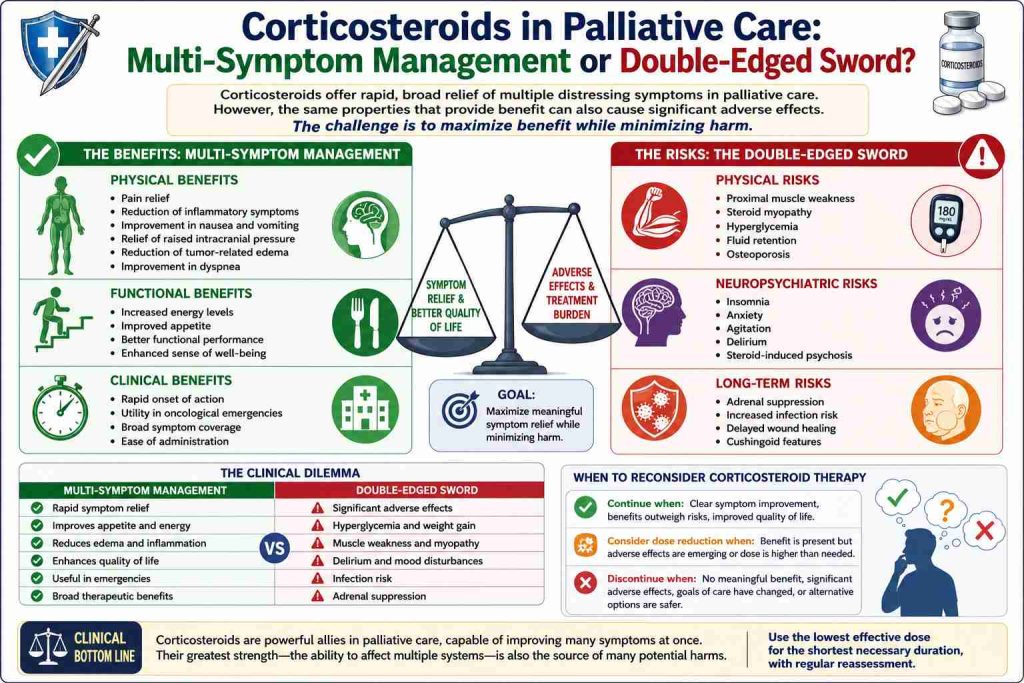
This balance between considerable benefits and potential harms has led clinicians to view corticosteroids as both a valuable therapeutic tool and a potential double-edged sword in palliative care. Understanding their indications, mechanisms, benefits, and risks is essential for optimizing patient outcomes while minimizing treatment-related complications.
Why Are Corticosteroids Commonly Used in Palliative Care?
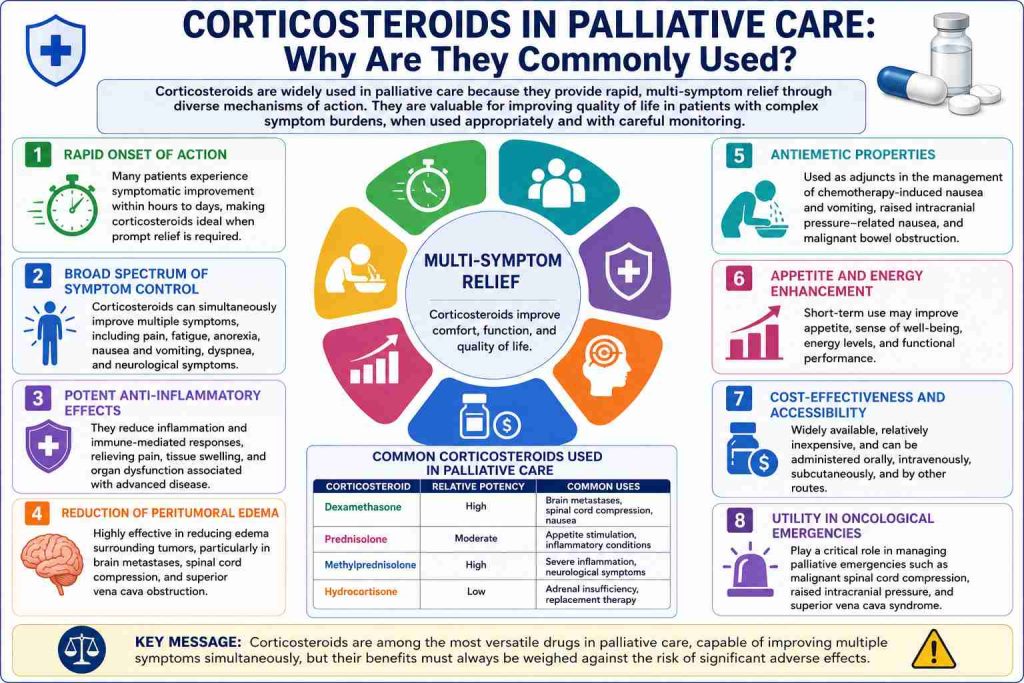
Corticosteroids are among the most versatile and frequently prescribed medications in palliative care due to their ability to alleviate a wide range of distressing symptoms through multiple mechanisms of action. Their potent anti-inflammatory, anti-edema, and immunomodulatory effects enable rapid symptom relief in various clinical situations. Unlike many medications that target a single symptom, corticosteroids often provide simultaneous improvement in several domains, making them particularly valuable in patients with complex symptom burdens.
The widespread use of corticosteroids in palliative care is also attributed to their rapid onset of action, ease of administration, availability in multiple formulations, and relatively low cost. In carefully selected patients, they can improve functional status, enhance quality of life, and reduce symptom-related distress. However, these benefits must always be balanced against the potential for significant adverse effects, particularly with prolonged use.
Key Reasons for Their Frequent Use
Corticosteroids occupy a unique position in palliative care because few medications can simultaneously improve such a wide range of symptoms. They may rapidly relieve pain, reduce nausea, improve appetite, enhance energy levels, alleviate dyspnea, and decrease tumor-related edema. However, the same pharmacological properties that make corticosteroids effective can also lead to significant adverse effects affecting multiple organ systems. Consequently, clinicians are often required to balance immediate symptomatic benefits against the potential for long-term harm. The decision to prescribe corticosteroids should therefore be individualized and guided by the patient’s prognosis, goals of care, expected duration of treatment, and overall symptom burden.
The Benefits: Multi-Symptom Management
Physical Benefits
- Pain relief
- Reduction of inflammatory symptoms
- Improvement in nausea and vomiting
- Relief of raised intracranial pressure
- Reduction of tumor-related edema
- Improvement in dyspnea
Functional Benefits
- Increased energy levels
- Improved appetite
- Better functional performance
- Enhanced sense of well-being
Clinical Benefits
- Rapid onset of action
- Utility in oncological emergencies
- Broad symptom coverage
- Ease of administration
The Risks: The Double-Edged Sword
Physical Risks
- Proximal muscle weakness
- Steroid myopathy
- Hyperglycemia
- Fluid retention
- Osteoporosis
Neuropsychiatric Risks
- Insomnia
- Anxiety
- Agitation
- Delirium
- Steroid-induced psychosis
Long-Term Risks
- Adrenal suppression
- Increased infection risk
- Delayed wound healing
- Cushingoid features
Conclusion
Corticosteroids remain one of the most valuable and versatile medications in palliative care because of their ability to provide rapid relief from multiple distressing symptoms, including pain, nausea, anorexia, fatigue, dyspnea, and tumor-related edema. Their broad therapeutic effects can significantly improve patient comfort, functional status, and quality of life, particularly in advanced illness and palliative emergencies.
However, these benefits must be balanced against their potential for significant adverse effects, such as insomnia, hyperglycemia, muscle weakness, mood disturbances, infection, and adrenal suppression. The same mechanisms that contribute to symptom relief may also lead to considerable treatment-related burden, especially with prolonged use.
Therefore, corticosteroids should neither be viewed as a universal solution nor avoided because of their risks. Instead, their use should be individualized, guided by clear clinical goals, expected benefits, prognosis, and regular reassessment. Ultimately, corticosteroids are most effective when prescribed thoughtfully, ensuring that meaningful symptom relief outweighs the potential for harm.
Key Take-Home Message
Corticosteroids are a powerful tool for multi-symptom management in palliative care, but their greatest strength can also become their greatest limitation. The challenge for clinicians is to maximize benefit while minimizing harm, making corticosteroids both an invaluable therapy and a potential double-edged sword.