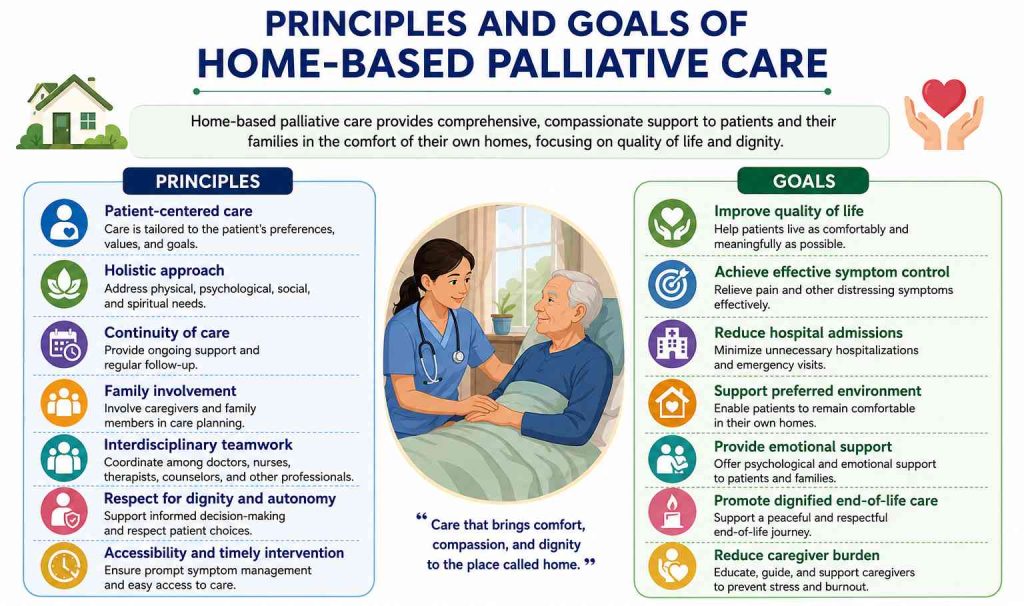
Home-based palliative care is an approach that delivers comprehensive care to patients with serious or life-limiting illnesses within the comfort of their own homes. As many patients prefer to remain in a familiar environment surrounded by loved ones, home-based care has become an important extension of palliative services beyond hospitals and inpatient units. This model focuses on improving quality of life, symptom control, emotional support, and dignity, while reducing unnecessary hospital visits.
Successful home-based palliative care requires more than medical treatment alone. It involves careful planning, coordination of resources, caregiver preparation, and continuous communication among healthcare providers, patients, and families. A structured logistics approach ensures that care remains safe, organized, and patient-centered.
For many patients with advanced cancer, organ failure, neurodegenerative disorders, and frailty, staying at home during the course of illness—and even at the end of life—is often a preferred choice. Home-based care encourages family participation in caregiving, strengthens emotional support, and may reduce unnecessary emergency visits and hospitalizations. However, successful implementation requires careful planning, organized logistics, trained caregivers, and coordinated multidisciplinary support.
A structured step-by-step logistics guide can help healthcare teams and families deliver safe, efficient, and patient-centered care at home, ensuring continuity of support throughout the illness journey.
Step-by-Step Logistics Guide for Home-Based Palliative Care – Effective home-based palliative care requires a structured and coordinated approach to ensure continuity of care, timely symptom management, and support for both patients and caregivers. A stepwise logistics plan helps healthcare teams organize resources efficiently and deliver safe, patient-centered care at home.
- Patient Assessment and Selection
- Establish Goals of Care
- Build the Multidisciplinary Team
- Home Environment Preparation
- Arrange Medical Equipment
- Medication Planning
- Caregiver Training
- Establish Communication System
- Monitoring and Follow-Up
- End-of-Life Planning
- Quality Assurance and Review
Step 1: Patient Assessment and Selection – The first step is to identify patients who are appropriate for home-based care. Assessment should include disease status, prognosis, symptom burden, functional status, home environment, and caregiver availability. Understanding the patient’s wishes and goals is equally important.
Step 2: Establish Goals of Care – Clear discussions should be conducted with patients and families regarding treatment goals, expectations, preferred place of care, advance care planning, and resuscitation preferences. This ensures that care aligns with patient values and priorities.
Step 3: Build the Multidisciplinary Team – Home-based palliative care requires coordinated efforts from healthcare professionals including physicians, nurses, physiotherapists, social workers, psychologists, and trained caregivers. Each team member contributes to different aspects of care.
Step 4: Home Environment Preparation – The home environment should be assessed and modified to ensure patient safety and comfort. Adequate space, accessibility, hygiene, proper lighting, and availability of basic facilities are important considerations.
Step 5: Arrange Medical Equipment – Necessary medical equipment should be organized according to patient needs. This may include oxygen cylinders, wheelchairs, walkers, suction devices, hospital beds, nebulizers, and monitoring equipment.
Step 6: Medication Planning – A clear medication plan should be developed including regular medications, as-needed (PRN) medications, emergency symptom-control drugs, and written medication schedules to avoid confusion.
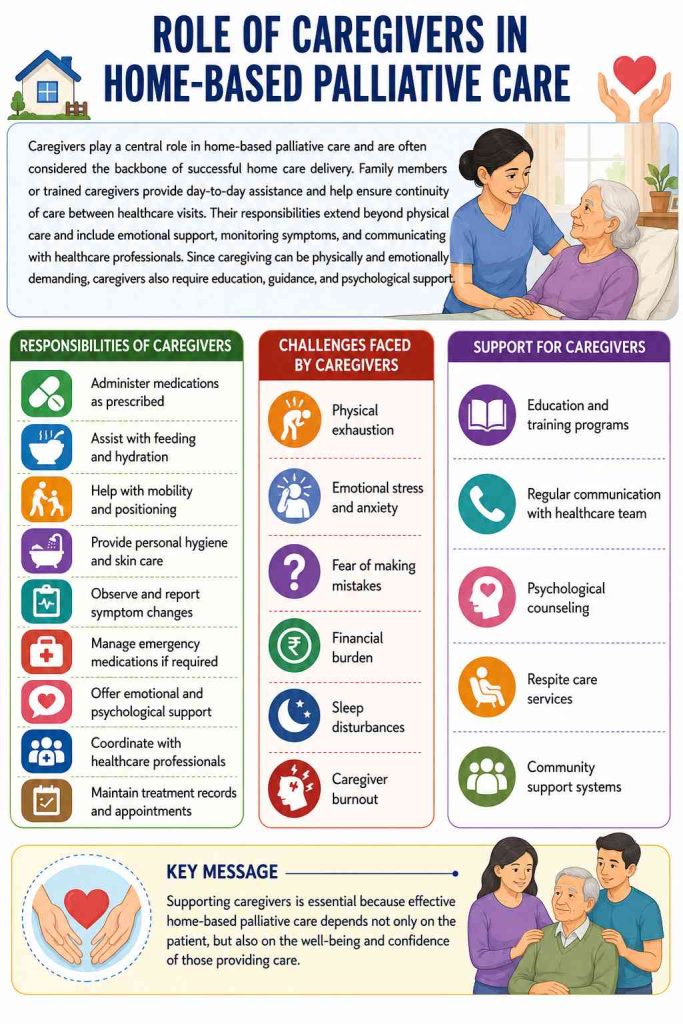
Step 7: Caregiver Training – Caregivers should receive education regarding medication administration, feeding techniques, positioning, skin care, basic nursing procedures, and recognition of warning signs or emergencies.
Step 8: Establish Communication System – A communication system should be created to allow continuous contact with healthcare providers. This may include telephone support, telemedicine services, emergency contact number, and scheduled home visits.
Step 9: Monitoring and Follow-Up – Regular follow-up visits and reassessments help monitor symptoms, evaluate treatment effectiveness, identify new concerns, and modify care plans according to changing patient needs.
Step 10: End-of-Life Planning – Discussions regarding end-of-life preferences should include preferred place of care, cultural and spiritual considerations, advance directives, and emotional preparation of family members.
Step 11: Quality Assurance and Review – Regular evaluation of care quality, caregiver satisfaction, patient comfort, and continuity of services helps identify gaps and improve the overall effectiveness of home-based care
Benefits of home-based palliative care
- Improved quality of life
- Better symptom management
- Greater patient comfort in familiar surroundings
- Reduced hospital admissions and emergency visits
- Increased family involvement in care
- Enhanced emotional and psychological support
- Supports patient autonomy and preferences
- More personalized and patient-centered care
- Cost-effective compared to prolonged hospitalization
- Promotes dignified end-of-life care
- Improves continuity of care
- Reduces stress associated with hospital environments
Challenges in Implementing Home-Based Palliative Care – Despite its many benefits, home-based palliative care faces several practical and logistical challenges that may affect the quality and continuity of care. Limited availability of healthcare resources, lack of trained personnel, caregiver burden, and difficulty in accessing essential medications can interfere with effective service delivery. In addition, emotional stress, financial concerns, and communication barriers may further complicate home care. Recognizing these challenges is important to develop strategies that improve patient support and ensure safe and effective care at home.
Role of caregivers – Caregivers play a central role in home-based palliative care and are often considered the backbone of successful home care delivery. Family members or trained caregivers provide day-to-day assistance and help ensure continuity of care between healthcare visits.