Conservative kidney management (CKM), also known as renal supportive care, is an increasingly recognized treatment approach for patients with advanced chronic kidney disease (CKD) or end-stage kidney disease (ESKD) who choose not to undergo dialysis or for whom dialysis is unlikely to provide meaningful clinical benefit. Rather than replacing kidney function, this approach focuses on optimizing quality of life through comprehensive symptom management, psychosocial support, shared decision-making, and advance care planning.
Patients declining dialysis often experience a high burden of physical and psychological symptoms, including fatigue, pruritus, pain, nausea, anorexia, dyspnea, restless legs syndrome, sleep disturbances, anxiety, and depression. These symptoms frequently coexist and worsen as kidney function declines, significantly affecting daily activities and overall well-being. Effective management requires a multidisciplinary, patient-centered approach that balances symptom relief with careful consideration of altered drug pharmacokinetics, comorbidities, and patient goals of care.
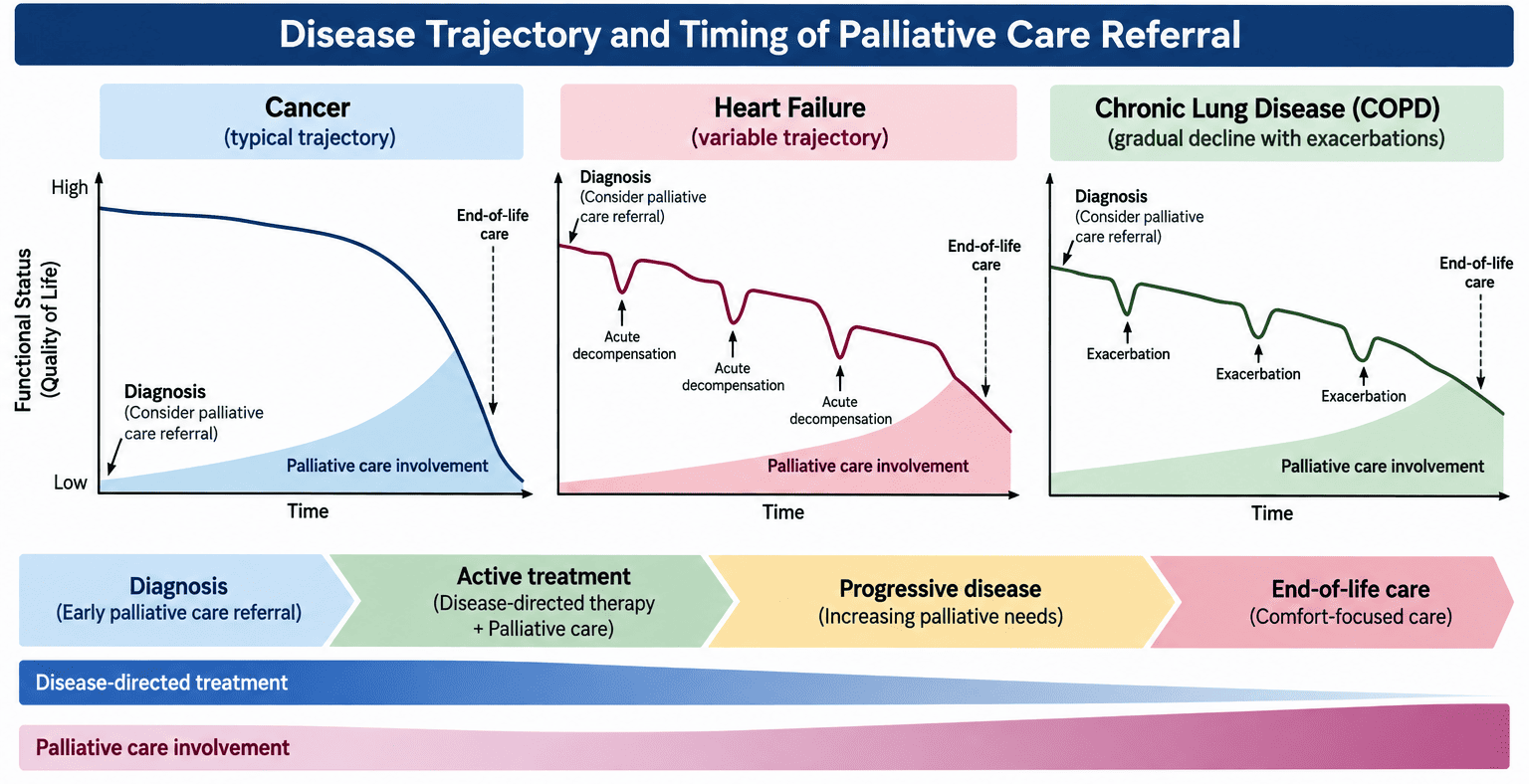
Renal palliative care does not represent withdrawal or withholding of treatment; rather, it emphasizes active, holistic management aimed at relieving suffering while respecting patient preferences and values. Early integration of palliative care into conservative kidney management has been shown to improve symptom control, facilitate informed decision-making, reduce unnecessary hospitalizations, and support patients and their families throughout the disease trajectory.
Dialysis may not always provide a meaningful survival or quality-of-life benefit, particularly in frail older adults with multiple comorbidities. Patients may choose conservative kidney management after understanding the potential benefits and burdens of dialysis.
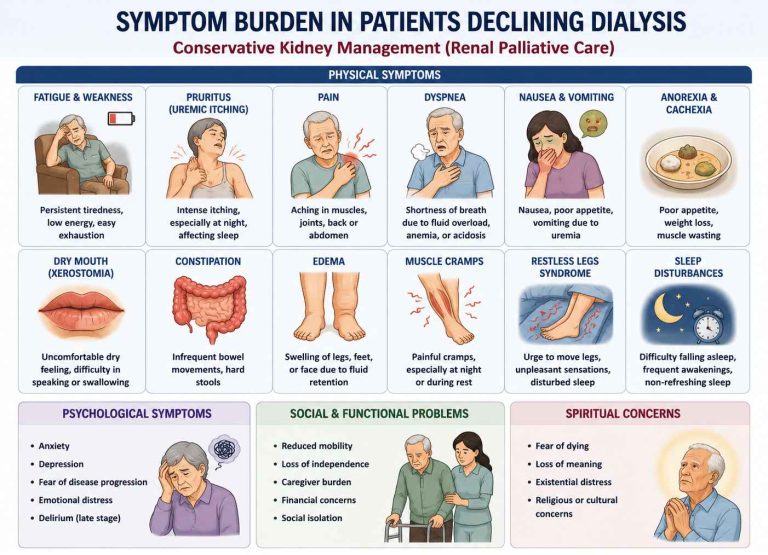
Patients with advanced chronic kidney disease (CKD) or end-stage kidney disease (ESKD) managed conservatively often experience a high burden of physical, psychological, and functional symptoms that progressively worsen as renal function declines. Many symptoms are multifactorial, resulting from uremia, electrolyte imbalances, anemia, chronic inflammation, fluid overload, and associated comorbidities. These symptoms frequently occur simultaneously, significantly impairing quality of life and increasing caregiver burden. A comprehensive symptom assessment is therefore the cornerstone of renal palliative care and should be performed regularly using validated symptom assessment tools.
“Effective renal palliative care is not disease-centered but symptom-centered. Systematic assessment and individualized management of each symptom can substantially improve comfort, function, and quality of life for patients who choose conservative kidney management.”
Challenges- Providing high-quality conservative kidney management can be challenging because patients with advanced chronic kidney disease often experience progressive symptom burden, multiple comorbidities, and complex psychosocial needs. In addition, altered drug pharmacokinetics, frequent polypharmacy, and the absence of dialysis as a therapeutic option require careful clinical judgment. Effective management therefore depends on regular reassessment, multidisciplinary collaboration, and clear communication with patients and their families to ensure that care remains aligned with their goals and preferences.
Conservative kidney management is an active, patient-centered treatment approach for individuals with advanced chronic kidney disease or end-stage kidney disease who decline dialysis or are unlikely to benefit from it. The primary focus is not on replacing kidney function but on relieving suffering, managing symptoms effectively, and preserving quality of life. Because these patients frequently experience a complex combination of physical, psychological, social, and spiritual symptoms, comprehensive assessment and individualized management are essential.
Successful renal palliative care requires a holistic, multidisciplinary approach that combines meticulous symptom control, careful medication selection, psychosocial support, and advance care planning. Treatment decisions should always be guided by the patient’s values, goals, and preferences while acknowledging the altered pharmacokinetics associated with advanced kidney disease.
Ultimately, conservative kidney management is not a passive alternative to dialysis but a proactive model of care that prioritizes comfort, dignity, and quality of life throughout the course of advanced kidney disease.
Declining dialysis does not mean declining care. Renal palliative care provides active, holistic, and compassionate symptom management, enabling patients with advanced kidney disease to live with the greatest possible comfort, dignity, and quality of life according to their individual goals and values.


I am a physician specialized in Palliative Medicine (MD) with a strong commitment to improving the quality of life for patients with life-limiting illnesses. My clinical focus is on comprehensive symptom management, holistic patient care, and psychosocial support for patients and families.Beyond clinical practice, I am deeply interested in palliative care education, research, and integrating evidence-based practices into patient-centered care. I aim to contribute to the growth of palliative care services, raise awareness about end-of-life issues, and advocate for a more compassionate healthcare system.