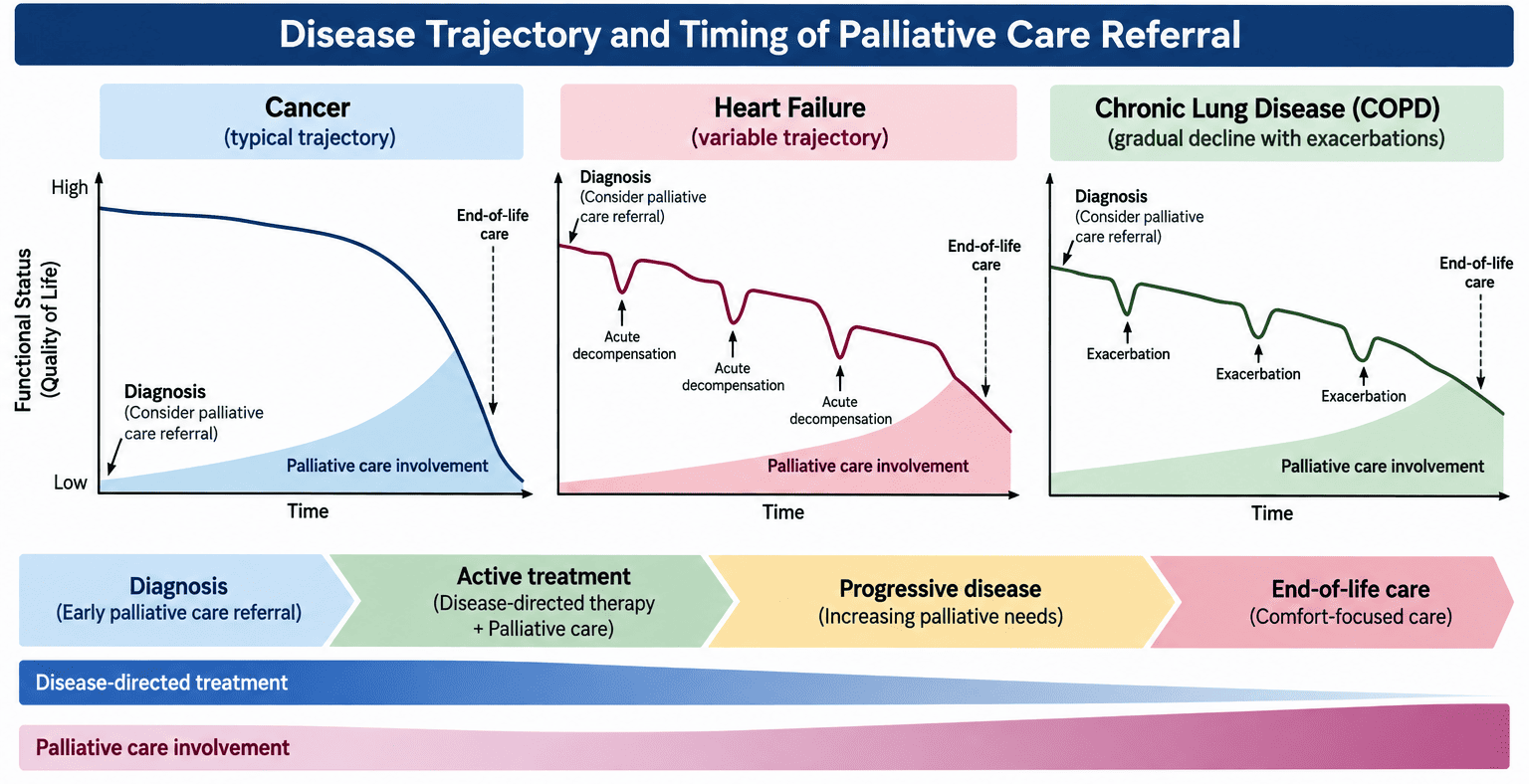
The terms palliative care and hospice care are often used interchangeably, leading to confusion among patients, families, and even healthcare professionals. Although both approaches focus on improving quality of life and relieving suffering, they are not the same. Misunderstanding these concepts can result in delayed referrals, missed opportunities for symptom management, and unrealistic expectations regarding treatment goals.
Palliative care is a specialized medical approach aimed at improving the quality of life of patients living with serious illnesses by addressing physical, psychological, social, and spiritual distress. It can be provided at any stage of illness and alongside disease-directed treatments such as chemotherapy, dialysis, or surgery.
Hospice care, on the other hand, is a form of palliative care specifically designed for patients approaching the end of life when curative treatment is no longer beneficial or desired. The primary focus shifts entirely to comfort, dignity, and support for both patients and their families.
Understanding the similarities and differences between these two models of care is essential for timely referral, appropriate care planning, and better patient outcomes.
|
Feature
|
Palliative Care
|
Hospice Care
|
|---|---|---|
|
Goal
|
Improve quality of life while treating illness
|
Comfort-focused end-of-life care
|
|
Timing
|
Any stage of serious illness
|
Final months of life
|
|
Curative Treatment
|
Can continue alongside palliative care
|
Usually discontinued
|
|
Disease Stage
|
Early, middle, or advanced disease
|
Advanced terminal illness
|
|
Location
|
Hospital, clinic, home, hospice
|
Home, hospice facility, nursing home
|
|
Life Expectancy Requirement
|
No specific requirement
|
Usually limited prognosis
|
|
Focus
|
Symptom relief + disease management
|
Comfort and dignity
|
|
Patient Eligibility
|
Any serious illness
|
Terminal illness with limited life expectancy
|
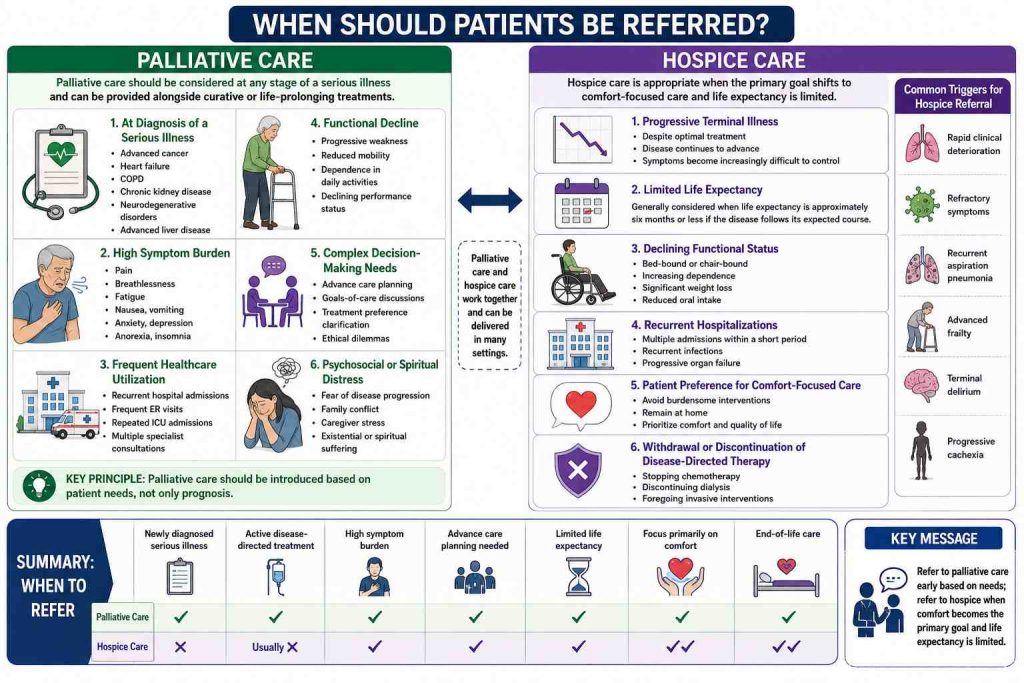
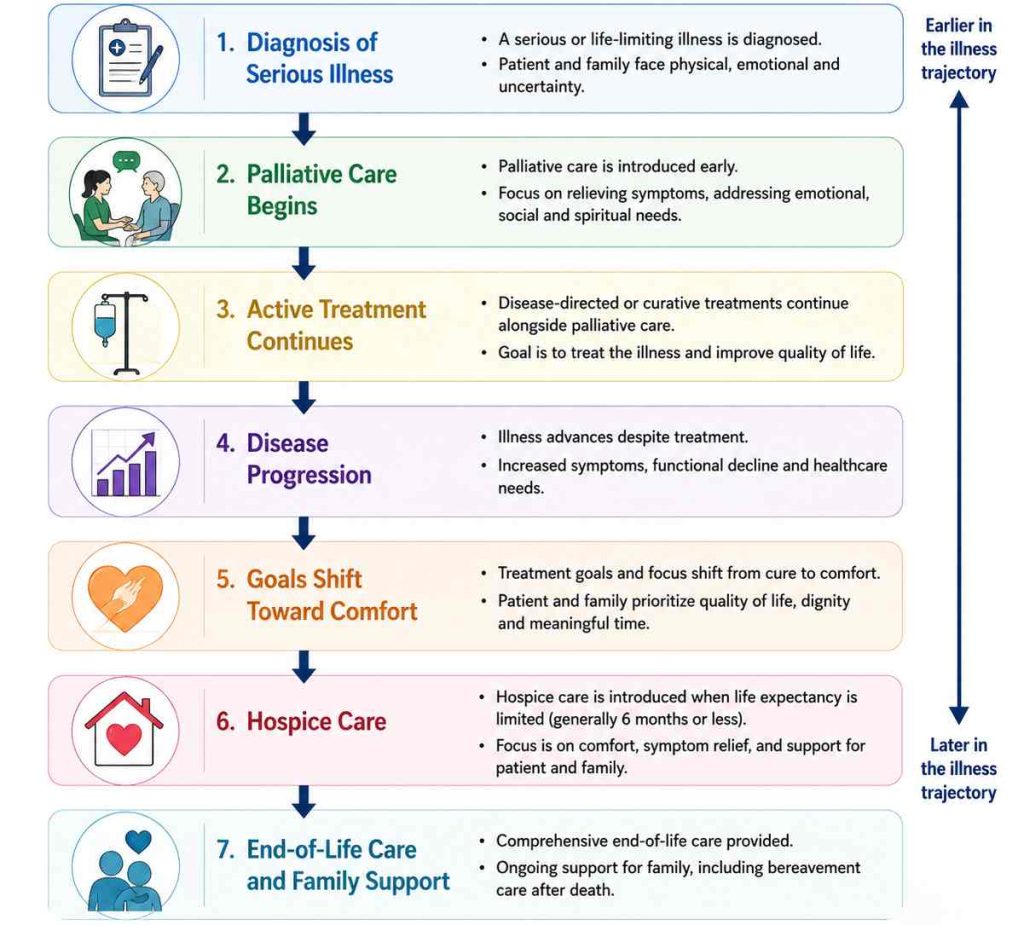
Palliative care and hospice care are closely related approaches that share a common commitment to relieving suffering, enhancing quality of life, and supporting patients and families facing serious illness. However, they differ in their timing, eligibility, and goals of care. Palliative care can be introduced at any stage of a serious illness alongside disease-directed treatment, whereas hospice care is intended for patients approaching the end of life when comfort becomes the primary focus.
Understanding these distinctions is essential for both patients and clinicians, as misconceptions often lead to delayed referrals and missed opportunities for symptom management, advance care planning, and psychosocial support. Rather than representing separate or competing models of care, palliative care and hospice care exist along a continuum of supportive care that adapts to the changing needs of patients throughout the course of illness.
Ultimately, the right care at the right time can improve comfort, preserve dignity, support informed decision-making, and help patients live as fully and meaningfully as possible, regardless of the stage of disease.


I am a physician specialized in Palliative Medicine (MD) with a strong commitment to improving the quality of life for patients with life-limiting illnesses. My clinical focus is on comprehensive symptom management, holistic patient care, and psychosocial support for patients and families.Beyond clinical practice, I am deeply interested in palliative care education, research, and integrating evidence-based practices into patient-centered care. I aim to contribute to the growth of palliative care services, raise awareness about end-of-life issues, and advocate for a more compassionate healthcare system.