Palliative care aims to improve the quality of life of patients and families facing serious illness by addressing suffering in all its forms. Suffering is rarely limited to physical symptoms alone; it often includes emotional distress, social challenges, and spiritual concerns. Therefore, comprehensive palliative care requires a holistic approach that considers the whole person rather than focusing solely on disease.
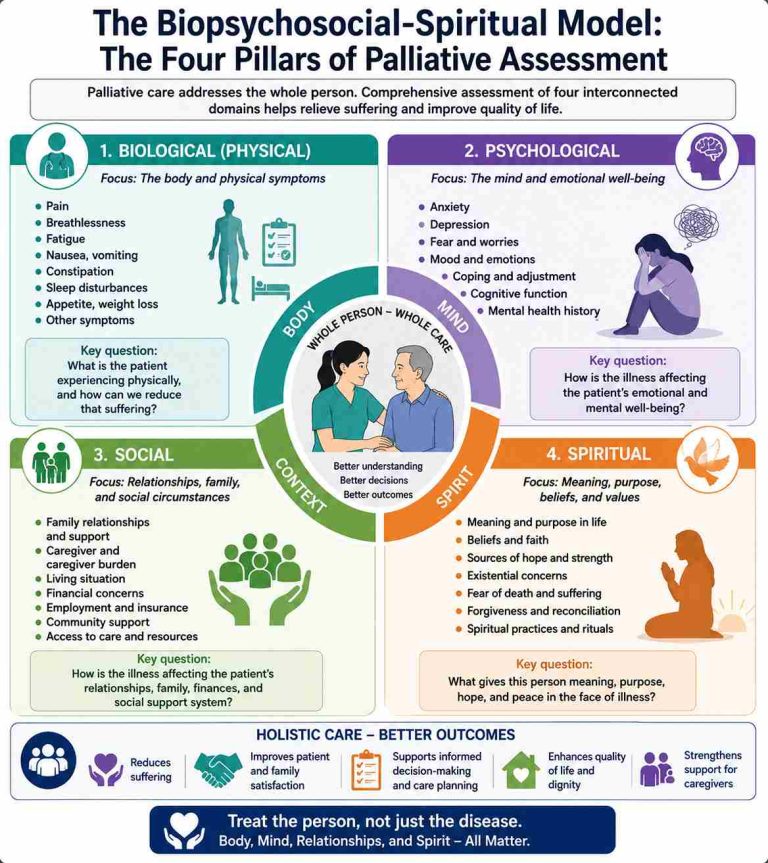
The Biopsychosocial-Spiritual (BPSS) Model, first proposed by psychiatrist George L. Engel and later expanded in palliative care practice, provides a framework for understanding the multiple dimensions of patient suffering. This model recognizes that physical, psychological, social, and spiritual factors are interconnected and collectively influence a patient’s experience of illness.
By systematically assessing each of these domains, healthcare professionals can identify unmet needs, develop individualized care plans, and provide truly patient-centered care. The BPSS model has therefore become one of the foundational principles of modern palliative care.
Together, these four domains form the foundation of holistic palliative care assessment.
The biological or physical domain focuses on the assessment and management of symptoms directly related to the patient’s illness and its treatment. Physical suffering is often the most visible component of distress and can significantly affect quality of life. Comprehensive assessment should identify the nature, severity, impact, and progression of symptoms, as well as the patient’s functional status and treatment-related complications. Effective symptom control is a cornerstone of palliative care and often serves as the gateway to addressing psychological, social, and spiritual concerns.
Serious illness affects not only the body but also the mind. Patients frequently experience emotional distress related to symptoms, uncertainty about the future, loss of independence, changes in body image, and fear of death. Psychological suffering may manifest as anxiety, depression, anger, hopelessness, or difficulty coping with illness. If left unrecognized, psychological distress can worsen physical symptoms, reduce treatment adherence, and negatively impact quality of life. Therefore, assessment of emotional well-being is an essential component of comprehensive palliative care.
Illness affects not only the individual patient but also their family, relationships, finances, and social roles. Serious disease can disrupt employment, create financial hardship, alter family dynamics, and increase caregiver burden. Social distress may significantly influence a patient’s ability to cope with illness and access appropriate care. Therefore, assessment of social factors is essential to identify practical needs, strengthen support systems, and improve overall quality of life.
The spiritual domain addresses questions of meaning, purpose, hope, beliefs, values, and existential concerns that often arise during serious illness. Spirituality is not limited to religion; it encompasses how individuals understand their lives, relationships, and place in the world. Patients facing life-limiting illnesses may struggle with questions such as “Why is this happening to me?”, “What gives my life meaning now?”, or “What will happen after death?”. Unaddressed spiritual distress can contribute significantly to suffering, while appropriate spiritual support can promote peace, acceptance, and improved quality of life.
Applying the BPSS Model in Clinical Practice – The Biopsychosocial-Spiritual model is not merely a theoretical framework but a practical tool that guides comprehensive patient assessment and care planning. During every palliative care consultation, clinicians should explore each of the four domains to identify sources of suffering and unmet needs. Information gathered from these assessments helps the multidisciplinary team develop individualized interventions that address the patient’s physical symptoms, emotional well-being, social circumstances, and spiritual concerns. By integrating all four domains into routine practice, healthcare professionals can provide truly holistic and patient-centered care.
|
Domain
|
Assessment Findings
|
Possible Interventions
|
|---|---|---|
|
Biological
|
Severe pain, fatigue, anorexia
|
Analgesics, symptom management
|
|
Psychological
|
Anxiety about disease progression
|
Counseling, relaxation techniques
|
|
Social
|
Financial difficulties, caregiver stress
|
Social worker referral, support services
|
|
Spiritual
|
Fear of death, loss of meaning
|
Spiritual counseling, chaplain support
|


I am a physician specialized in Palliative Medicine (MD) with a strong commitment to improving the quality of life for patients with life-limiting illnesses. My clinical focus is on comprehensive symptom management, holistic patient care, and psychosocial support for patients and families.Beyond clinical practice, I am deeply interested in palliative care education, research, and integrating evidence-based practices into patient-centered care. I aim to contribute to the growth of palliative care services, raise awareness about end-of-life issues, and advocate for a more compassionate healthcare system.