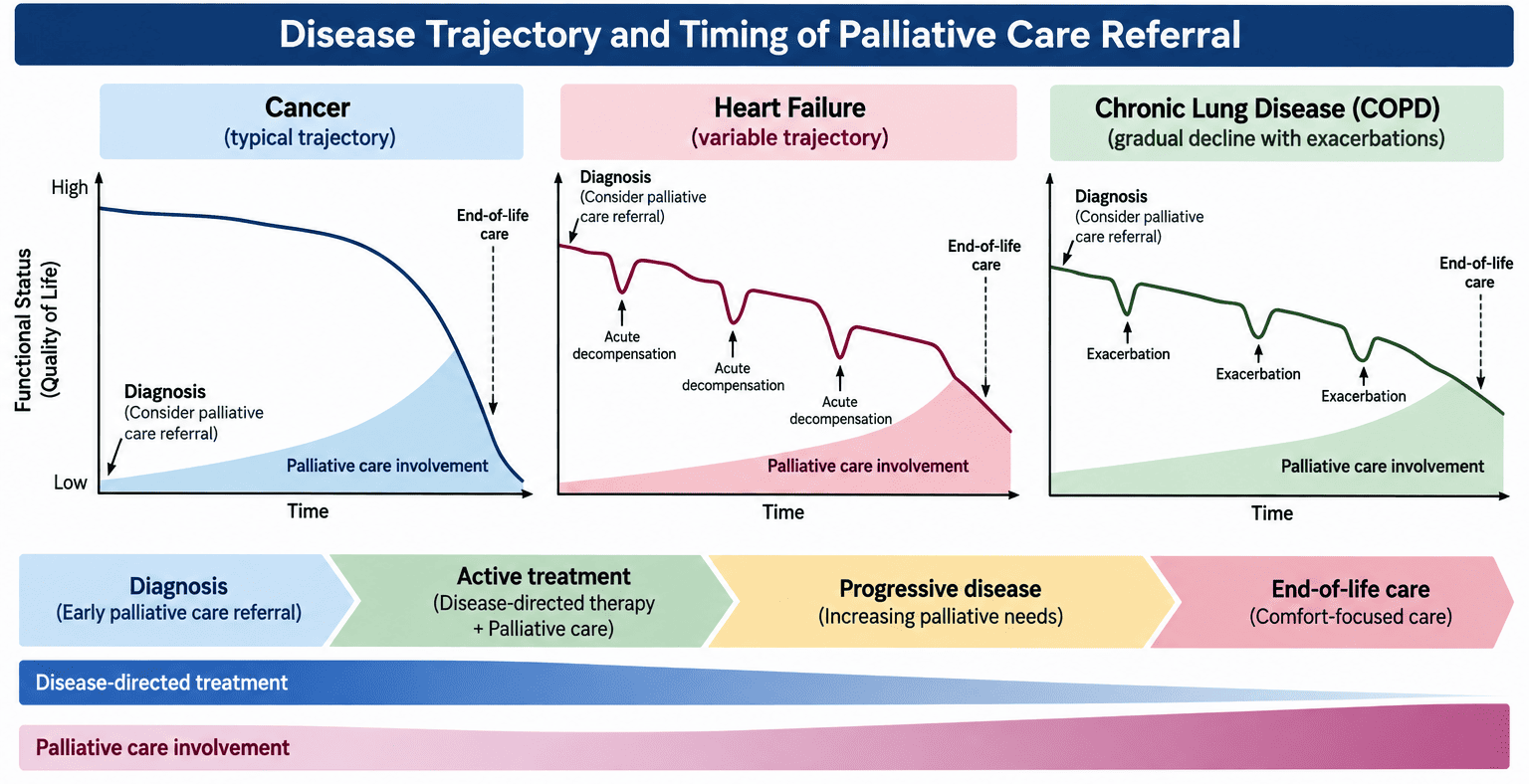
Dyspnea is the most prevalent and distressing symptom experienced by patients with end-stage chronic obstructive pulmonary disease (COPD). Unlike acute episodes of breathlessness caused solely by airflow limitation, many patients with advanced COPD develop panic-induced dyspnea, in which anxiety and panic amplify the sensation of breathlessness. This creates a vicious cycle: worsening dyspnea triggers fear and anxiety, leading to tachypnea, increased respiratory effort, and further worsening of breathlessness. Consequently, patients may experience repeated panic attacks, frequent emergency department visits, and significant impairment in quality of life.
The management of panic-induced dyspnea extends beyond bronchodilators and oxygen therapy. Effective palliative care requires a multidimensional approach that addresses the physiological, psychological, and behavioral components of breathlessness. Evidence supports the integration of non-pharmacological interventions such as breathing retraining, handheld fan therapy, relaxation techniques, and psychological support, alongside carefully selected pharmacological therapies including opioids and anxiolytics in appropriately selected patients. Early palliative care involvement can improve symptom control, reduce unnecessary hospitalizations, and enhance quality of life for both patients and caregivers.
Recognizing panic-induced dyspnea as a complex interaction between respiratory impairment and psychological distress enables clinicians to deliver individualized, compassionate, and evidence-based care that prioritizes comfort, function, and patient-centered goals.
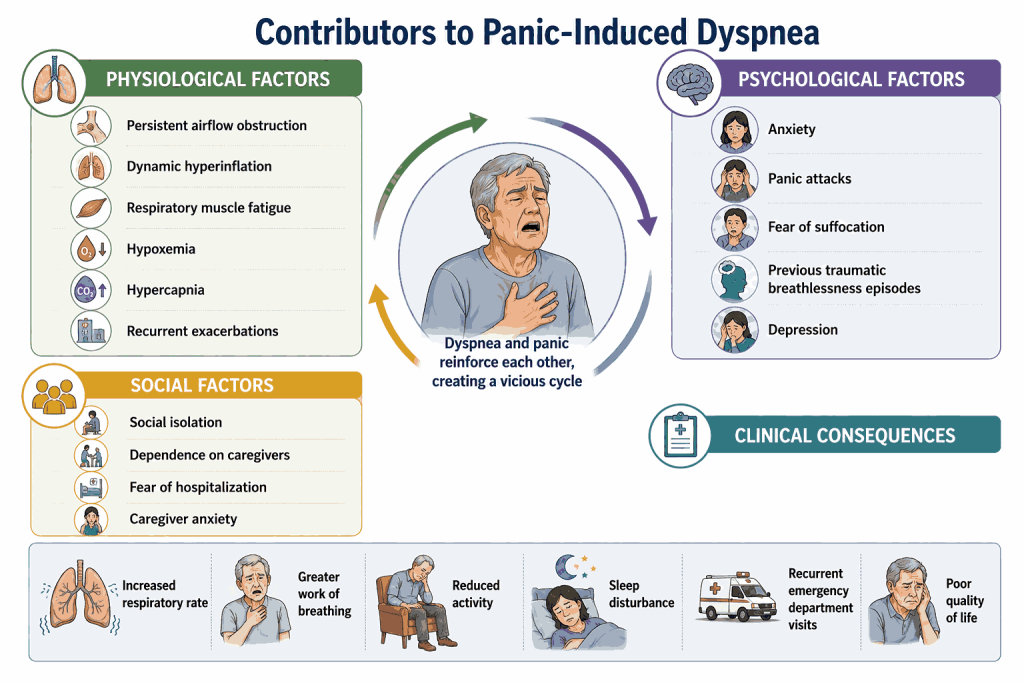
Dyspnea in end-stage COPD is a multidimensional symptom resulting from complex interactions between physiological impairment, psychological distress, and altered central perception of breathing. Progressive airflow limitation, lung hyperinflation, respiratory muscle fatigue, and impaired gas exchange increase the work of breathing. As breathlessness intensifies, patients frequently develop fear, anxiety, and panic, which further stimulate the sympathetic nervous system, increasing respiratory rate and worsening the sensation of breathlessness. This creates a self-perpetuating cycle of dyspnea and panic that significantly affects patient comfort and functional status.
Panic-induced dyspnea is one of the most distressing symptoms experienced by patients with end-stage COPD and extends far beyond physical breathlessness. It profoundly affects psychological well-being, functional independence, social interactions, and overall quality of life. Episodes of severe breathlessness are frequently accompanied by overwhelming fear, anxiety, and a sense of impending death, leading many patients to avoid physical activity and become increasingly dependent on caregivers. This progressive cycle of dyspnea, panic, inactivity, and deconditioning contributes to repeated hospitalizations and increased healthcare utilization.
The burden of panic-induced dyspnea also extends to family members and caregivers. Witnessing a loved one struggling to breathe often evokes feelings of helplessness, fear, anxiety, and emotional exhaustion. Caregivers may experience significant psychological stress, anticipate recurrent crises, and lose confidence in managing breathlessness at home. Consequently, effective palliative care should focus not only on relieving the patient’s symptoms but also on educating and supporting caregivers, enabling them to respond confidently during episodes of acute breathlessness.
|
Physical Impact
|
Pyschological Impact
|
|---|---|
|
Severe breathlessness
|
Anxiety and panic attacks
|
|
Fatigue and exhaustion
|
Fear of suffocation
|
|
Reduced exercise tolerance
|
Sense of impending death
|
|
Sleep disturbances
|
Depression
|
|
Progressive functional decline
|
Loss of confidence
|
|
Increased dependence in activities of daily living
|
Social withdrawal
|
|
Emotional Impact
|
Caregiver burden
|
|---|---|
|
Fear of witnessing breathlessness
|
Constant vigilance
|
|
Helplessness during dyspneic episodes
|
Sleep disruption
|
|
Anxiety about sudden deterioration
|
Emotional exhaustion
|
|
Anticipatory grief
|
Increased caregiving responsibilities
|
|
|
Burnout
|
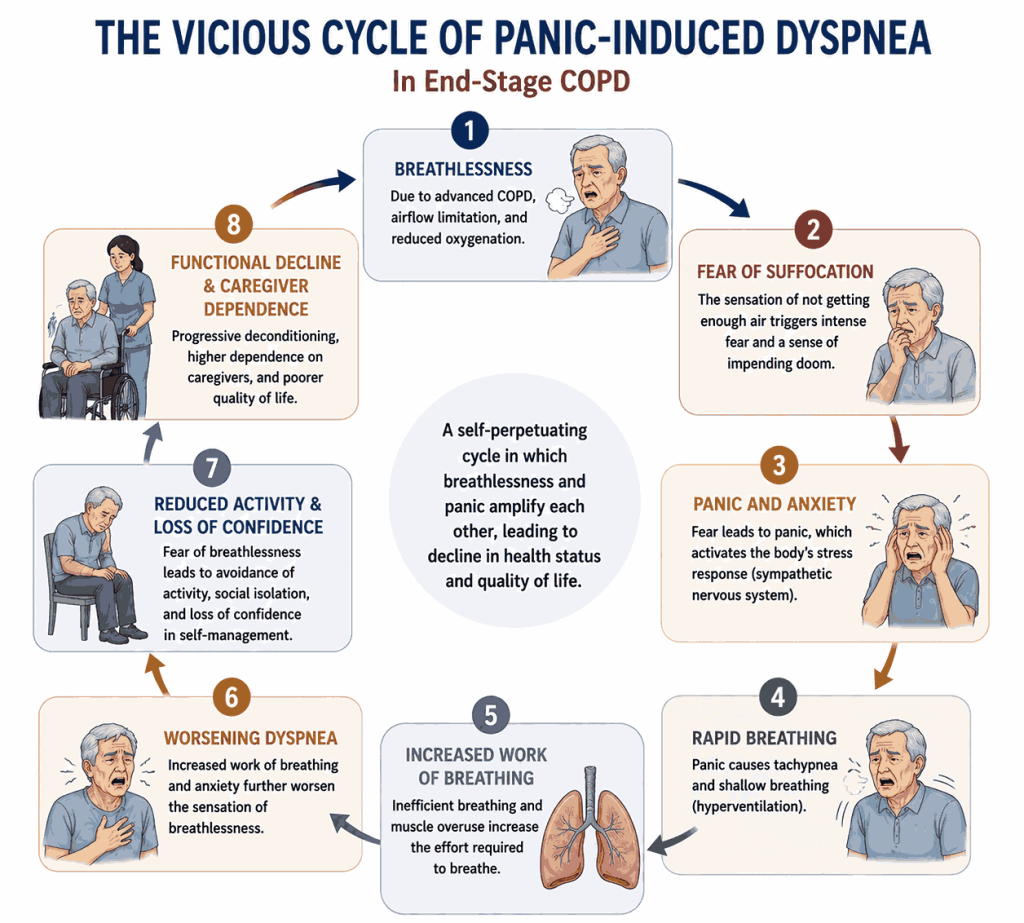
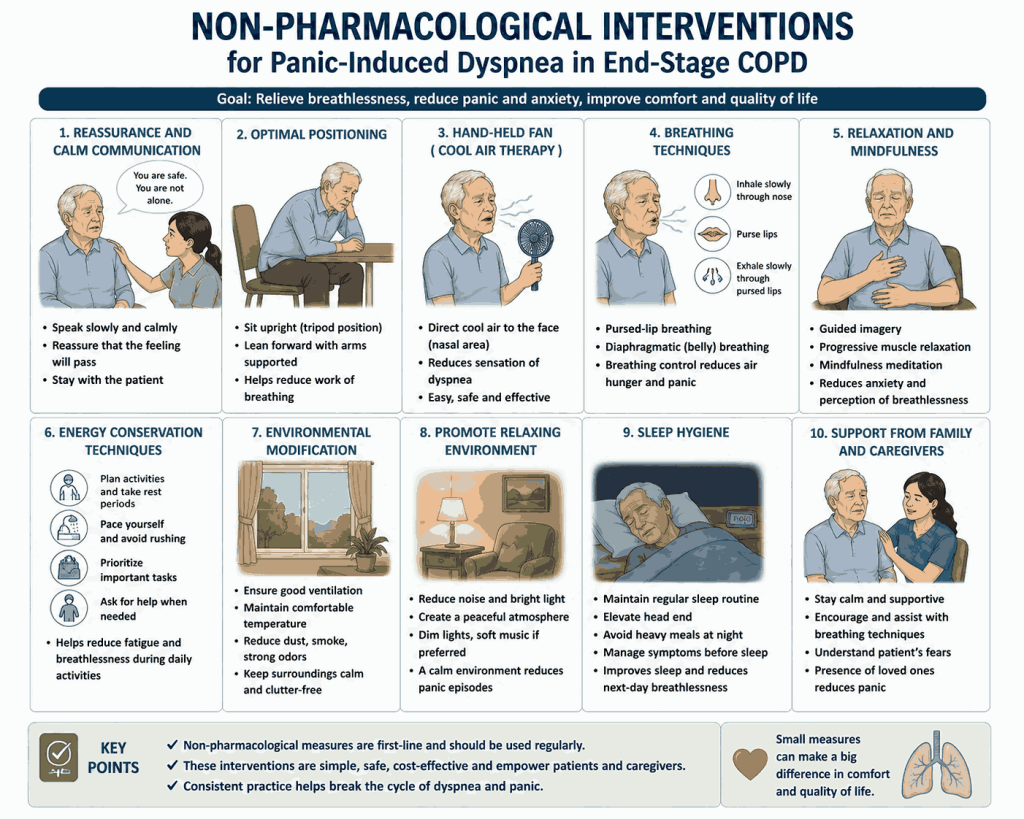
Management of panic-induced dyspnea in end-stage COPD requires a holistic approach that addresses both the physiological sensation of breathlessness and the psychological response of fear and panic. Since anxiety and dyspnea reinforce one another, treatment should combine non-pharmacological interventions, pharmacological therapies, psychosocial support, and advance care planning. Early recognition and prompt intervention can interrupt the dyspnea–panic cycle, reduce symptom burden, and improve patient comfort.


I am a physician specialized in Palliative Medicine (MD) with a strong commitment to improving the quality of life for patients with life-limiting illnesses. My clinical focus is on comprehensive symptom management, holistic patient care, and psychosocial support for patients and families.Beyond clinical practice, I am deeply interested in palliative care education, research, and integrating evidence-based practices into patient-centered care. I aim to contribute to the growth of palliative care services, raise awareness about end-of-life issues, and advocate for a more compassionate healthcare system.