Sleep Disturbances in Palliative Care Patients
Introduction
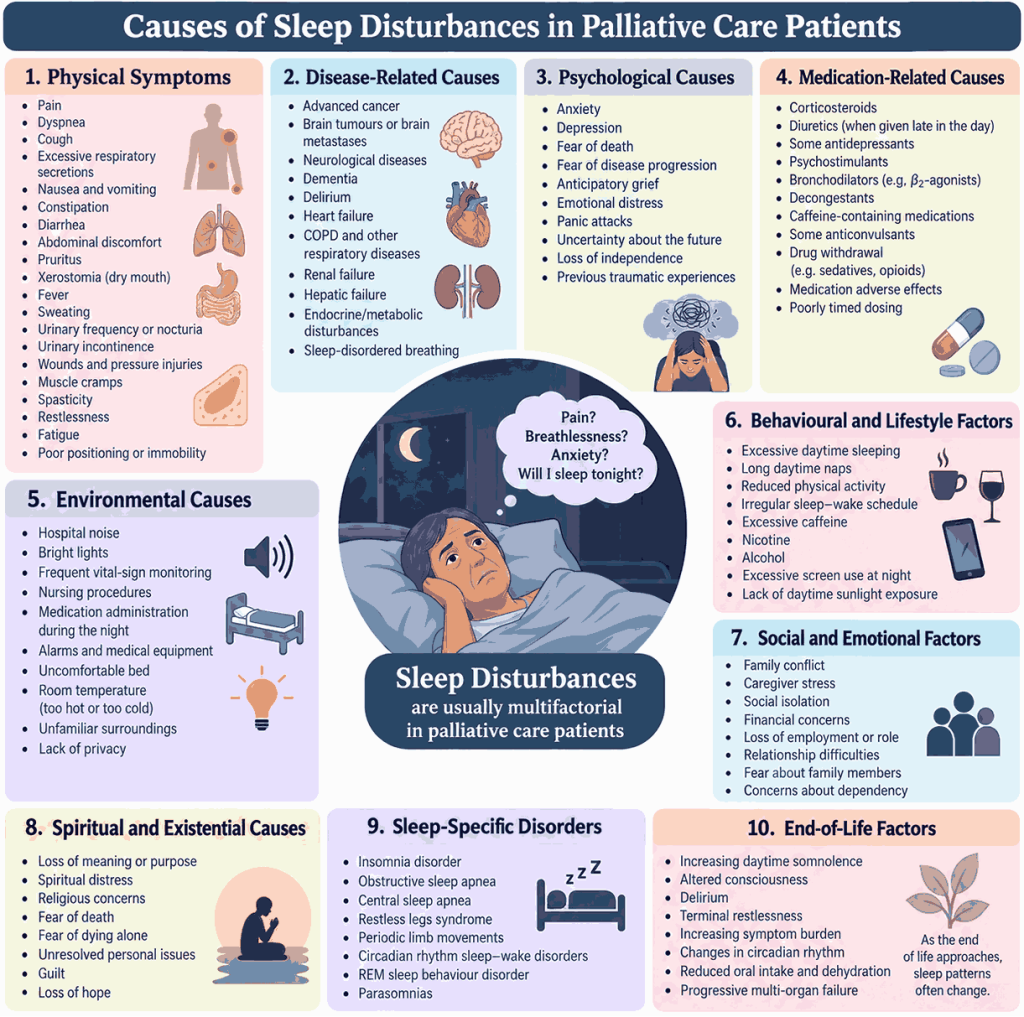
Sleep disturbances are particularly important in palliative care because patients often experience multiple simultaneous causes of poor sleep. Pain may prevent sleep initiation, while dyspnea, cough, nausea, pruritus, urinary symptoms, or anxiety may repeatedly awaken the patient during the night. Hospitalization itself can further disturb sleep through noise, light, frequent monitoring, medication administration, and interruptions.
Sleep problems may present in several forms, including insomnia, fragmented sleep, difficulty initiating sleep, early-morning awakening, excessive daytime sleepiness, hypersomnia, and reversal of the normal day–night sleep pattern. In patients with advanced neurological disease or delirium, the normal sleep–wake cycle may become profoundly disrupted.
Importantly, sleep disturbance should not be considered an isolated symptom. Poor sleep can amplify other symptoms, particularly pain and fatigue, and may contribute to irritability, anxiety, reduced coping ability, impaired concentration, and decreased participation in daily activities. This can create a vicious cycle in which physical and psychological symptoms further impair sleep, while inadequate sleep increases the perception of those symptoms.
In palliative care, the goal is therefore not simply to induce sleep with medication. Management should focus on identifying and treating reversible causes, controlling distressing symptoms, improving the sleep environment, supporting psychological well-being, and using medications selectively when necessary.
Types of Sleep Disturbances in Palliative Care Patients
- Sleep-onset insomnia– difficulty falling asleep.
- Sleep-maintenance insomnia– frequent or prolonged awakenings during the night.
- Early-morning awakening– waking earlier than desired and being unable to return to sleep.
- Non-restorative sleep– adequate sleep duration but the patient feels unrefreshed.
- Fragmented sleep– repeated interruptions resulting in poor-quality sleep.
- Day–night reversal– excessive daytime sleeping with wakefulness or agitation at night.
- Hypersomnia– excessive sleepiness or prolonged sleeping during the daytime.
- Irregular sleep–wake rhythm– loss of a predictable sleep pattern, particularly in advanced neurological disease or delirium.
- Nocturnal agitation– restlessness, confusion, or distress that predominantly occurs at night.
- Sleep-related breathing disturbance– sleep disruption associated with conditions such as obstructive sleep apnea, central sleep apnea, or advanced cardiopulmonary disease.
Assessment of Sleep Disturbances
- Assess the sleep pattern and duration.
- Identify whether the problem is with sleep initiation, maintenance, early awakening, or excessive sleepiness.
- Assess pain and other nocturnal symptoms.
- Review medications and their timing.
- Screen for anxiety, depression, delirium, and cognitive impairment.
- Assess for dyspnea, cough, pruritus, urinary symptoms, nausea, and constipation.
- Review caffeine, nicotine, alcohol, and stimulant use.
- Assess the sleep environment, particularly in hospitalized patients.
- Ask about daytime activity, naps, and exposure to natural light.
- Look for sleep-disordered breathingwhen clinically suspected.
- Consider a sleep diary or validated sleep assessment toolwhen appropriate.
- Most importantly, identify reversible causes before starting sedative medication.
Identify the cause
- Determine the type and pattern of sleep disturbance.
- Identify reversible causes.
- Assess and control pain.
- Assess dyspnea, cough, secretions, nausea, constipation, pruritus, and urinary symptoms.
- Screen for deliriumand cognitive impairment.
- Assess anxiety, depression, fear, and existential distress.
- Review all medications and their timing, especially corticosteroids, diuretics, stimulants, and other potentially activating drugs.
- Assess sleep environment and nighttime interruptions.
- Review daytime sleeping and activity levels.
- Consider sleep apnea or other sleep disorderswhen clinically suspected.
- Establish the patient’s usual sleep pattern and personal preferences.
- Clarify the patient’s goal—better nighttime sleep, less daytime fatigue, reduced distress, or restoration of a normal sleep–wake cycle.
MANAGEMENT
Non-Pharmacological Measures for Sleep Disturbances
- Regular sleep–wake schedule: Maintain consistent sleeping and waking times.
- Daytime activity: Encourage gentle physical activity according to the patient’s ability.
- Daylight exposure: Encourage natural light during the daytime to support circadian rhythm.
- Limit daytime naps: Avoid prolonged or late-afternoon naps.
- Sleep environment: Keep the room quiet, dark, comfortable, and at a suitable temperature.
- Reduce nighttime interruptions: Minimize unnecessary monitoring, procedures, noise, and bright lights.
- Comfortable positioning: Address pain, dyspnea, and physical discomfort before bedtime.
- Relaxation techniques: Use deep breathing, meditation, mindfulness, or gentle relaxation exercises.
- Bedtime routine: Encourage calming activities before sleep.
- Limit stimulants: Reduce caffeine, nicotine, and other stimulants, particularly in the evening.
- Psychological support: Address anxiety, fear, worries, and emotional distress.
- Caregiver involvement: Help caregivers maintain a calm and consistent nighttime routine.
Sleep Hygiene in Palliative Care
- Maintain a regular sleep–wake schedule – sleep and wake at similar times each day.
- Get daytime sunlight exposure – helps maintain the normal circadian rhythm.
- Stay physically active during the day – gentle activity as tolerated.
- Limit daytime naps– avoid long or late naps.
- Create a comfortable bedroom – keep it quiet, dark, and at a comfortable temperature.
- Avoid caffeine and nicotine in the evening.
- Limit screen exposure before bedtime.
- Use a relaxing bedtime routine – reading, gentle music, breathing exercises, or meditation.
- Avoid heavy meals close to bedtime.
- Limit excessive fluids at nightif nocturia is troublesome.
- Address symptoms before bedtime – particularly pain, dyspnea, cough, pruritus, and urinary symptoms.
- Minimize nighttime disturbances – especially unnecessary hospital procedures, noise, and bright lights.
- Use the bed primarily for sleep and restwhen feasible.
- Avoid forcing sleep – if unable to sleep, use a quiet relaxing activity and return to bed when sleepy.
Pharmacological Management of Sleep Disturbances in Palliative Care
- First treat the underlying cause: Optimize analgesia, dyspnea, nausea, pruritus, constipation, anxiety, or delirium before adding a hypnotic.
- Melatonin: May be considered when circadian rhythm disturbance or difficulty initiating sleep is prominent.
- Benzodiazepines: Such as lorazepam or temazepam may be used selectively for short-term severe insomnia or anxiety-related insomnia. Use cautiously because of sedation, falls, respiratory depression, tolerance, dependence, and delirium.
- Non-benzodiazepine hypnotics: Zolpidem may be considered for short-term insomnia in selected patients, with similar caution regarding sedation and falls.
- Sedating antidepressants: Mirtazapine may be useful when insomnia occurs with significant depression, anxiety, or poor appetite. Trazodone is another option in selected patients.
- Antipsychotics: Quetiapine or other antipsychotics should not be used routinely for simple insomnia. They may have a role when sleep disturbance is associated with delirium or other specific indications.
- Antihistamines: Sedating antihistamines such as hydroxyzine may sometimes be used, but anticholinergic effects can worsen confusion, urinary retention, constipation, and dry mouth, particularly in frail patients.
- At end of life: If there is refractory distress, severe agitation, or terminal delirium, appropriately titrated sedating medication may be considered according to the goals of care.