When to Refer to Palliative Care: Common Misconceptions Among Physicians
Introduction
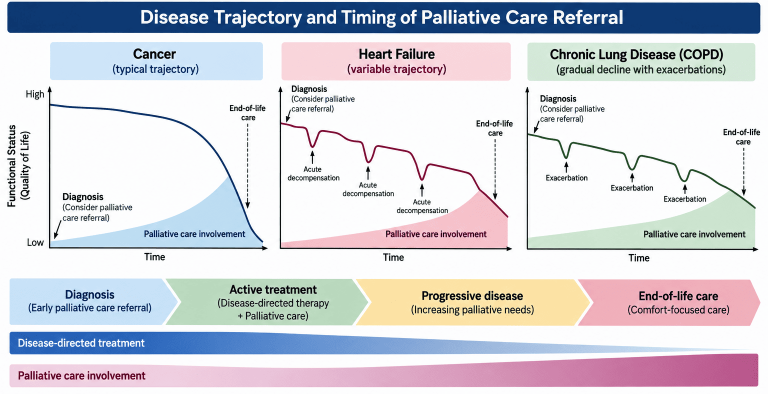
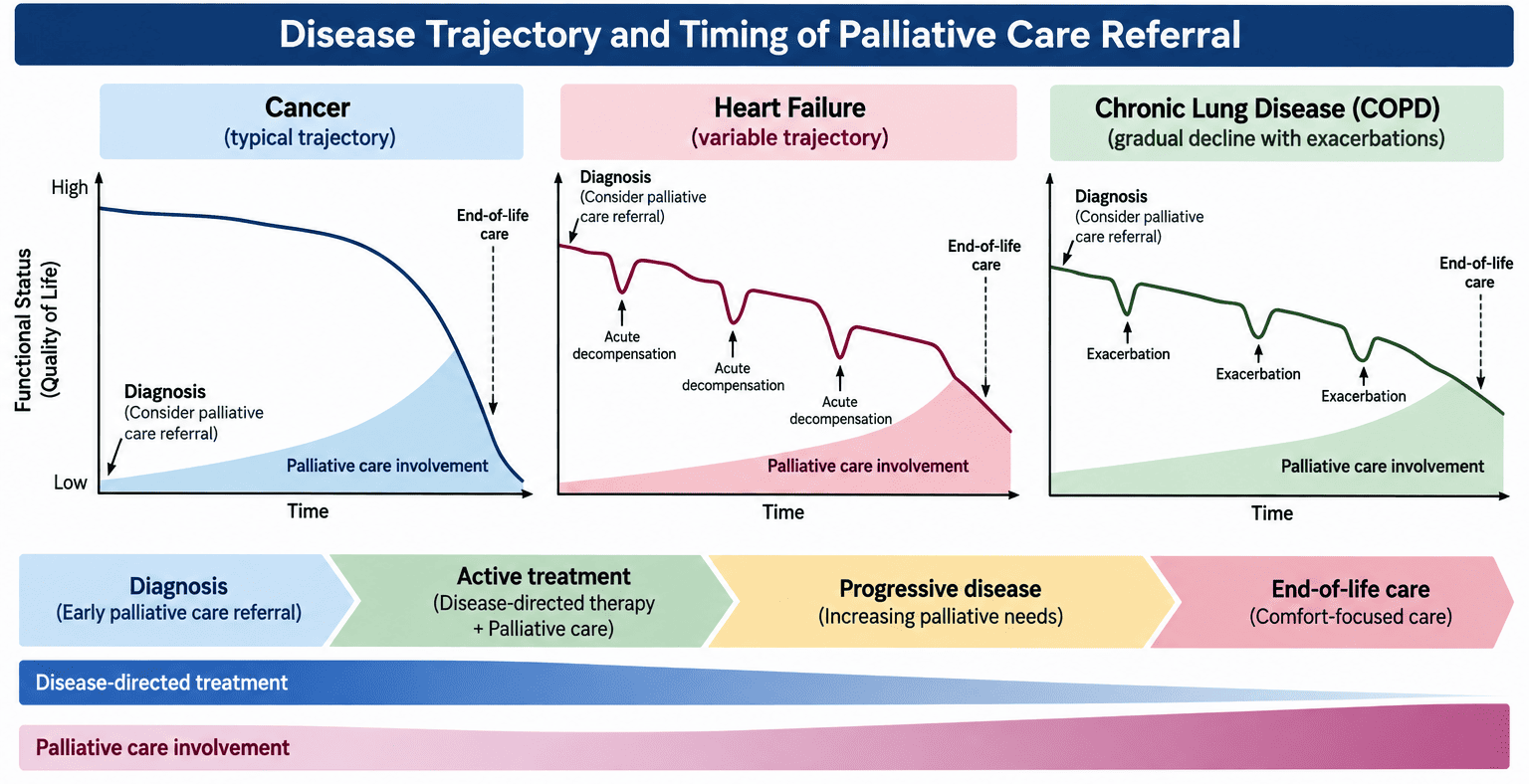
Palliative care is often misunderstood as care provided only during the final days or weeks of life. This misconception can result in delayed referrals and missed opportunities to address pain, symptoms, psychological distress, caregiver burden, and complex treatment decisions. In reality, palliative care can be introduced at any stage of a serious illness and may be provided alongside disease-directed and potentially curative treatments.
Referral should be based primarily on unmet patient and family needs, rather than on a predicted life expectancy alone. Patients with advanced cancer, heart failure, COPD, renal disease, neurological disorders, and other serious illnesses may benefit from palliative care when they develop significant symptom burden, functional decline, repeated hospitalizations, psychosocial distress, or complex decisions regarding treatment goals.
For physicians, recognizing the appropriate timing of referral is an important clinical skill. Early involvement allows the palliative care team to work alongside the primary treating team, rather than being introduced only when treatment options have been exhausted.
Common Misconceptions Among Physicians
Myth 1: “Palliative care means the patient is dying.”
Fact: Palliative care can begin early in serious illness and may continue alongside active treatment.
Myth 2: “We should refer only when curative treatment has stopped.”
Fact: Palliative care and disease-directed treatment can occur simultaneously.
Myth 3: “The patient is not sick enough yet.”
Fact: Significant symptoms, distress, or complex decision-making can justify referral even when prognosis is uncertain.
Myth 4: “Palliative care means giving up.”
Fact: Palliative care focuses on quality of life, symptom relief, communication, and goal-concordant treatment.
Myth 5: “Only cancer patients need palliative care.”
Fact: Patients with advanced heart, lung, kidney, neurological, and other serious diseases can also benefit.
Myth 6: “Referral should wait until the prognosis is less than 6 months.”
Fact: Palliative care is needs-based rather than dependent on a fixed prognostic threshold.
Myth 7: “We can manage everything ourselves.”
Fact: Specialist palliative care can provide additional expertise for complex symptoms, communication, psychosocial needs, and advance care planning.
When Should Physicians Consider Referral?
Early Referral to Palliative Care; Palliative care should be introduced from the diagnosis of a serious chronic or life-limiting disease and provided alongside disease-directed treatment. It is not necessary to wait until curative or disease-modifying treatment has stopped.
- Persistent or difficult-to-control symptoms
- Recurrent hospital or emergency admissions
- Progressive functional decline or frailty
- Significant psychological or spiritual distress
- Substantial caregiver burden
- Uncertainty about treatment goals
- Difficult decisions regarding life-sustaining treatment
- Need for advance care planning
- Serious illness with poor or uncertain prognosis
- Patient or family requests additional supportive care
Benefits of Early Palliative Care Referral
Early integration of palliative care with disease-directed treatment can provide several benefits:
- Earlier symptom control– better management of pain, dyspnea, nausea, fatigue, anxiety, and other distressing symptoms.
- Improved quality of life– focuses on comfort, function, independence, and what matters most to the patient.
- Better psychological support– helps address anxiety, depression, fear, uncertainty, and coping with chronic illness.
- Better communication– improves understanding of the illness, prognosis, and available treatment options.
- Early advance care planning– allows patients to express their preferences before a crisis or loss of decision-making capacity.
- Goal-concordant treatment– helps ensure medical interventions remain consistent with the patient’s values and priorities.
- Support for family and caregivers– provides education, emotional support, and assistance with caregiver burden.
- Fewer unnecessary hospitalizations and emergency visits– proactive symptom management can prevent some crisis-driven care.
- Better coordination of care– facilitates communication between specialists, primary-care teams, palliative-care teams, and home-care services.
- Smoother transition as disease progresses– patients and families already know the palliative team, avoiding an abrupt referral during the terminal phase.
- Potential reduction in non-beneficial aggressive treatment near the end of life, while maintaining appropriate disease-directed therapy when beneficial.
Strategies to Improve Early Palliative Care Referral
- Educate physicians about the role of early palliative care
- Introduce palliative care at the time of diagnosis of serious chronic disease
- Use needs-based rather than prognosis-based referral
- Establish clear referral criteria and pathways
- Integrate palliative care with routine disease management
- Encourage early goals-of-care discussions
- Involve patients and families in shared decision-making
- Strengthen communication between specialties
- Develop palliative care services at primary-care and community levels
- Provide regular training in palliative medicine and communication skills
- Promote home-based and community palliative care
- Reassess palliative care needs periodically as disease progresses
Conclusion
- Palliative care should begin early in the course of serious chronic illness, ideally from diagnosis when significant supportive needs are anticipated.
- Referral should be based on patient needs rather than prognosis alone.
- It should be provided alongside disease-directed treatment, not only after treatment failure.
- Early referral improves symptom management, communication, quality of life, advance care planning, and family support.
- Physicians play a key role in recognizing unmet needs and initiating timely referral.
- Palliative care is not a sign of treatment failure—it is an additional layer of care throughout the disease trajectory.
“Refer early, not only when the end is near.”