Opioids are among the most effective medications for managing moderate-to-severe pain and refractory dyspnea in patients with cancer and other serious illnesses. Despite their well-established role in palliative care, many patients and families are reluctant to accept opioid therapy because of misconceptions, fear, and misinformation. This phenomenon, commonly referred to as opioid phobia, can lead to delayed treatment, inadequate symptom control, unnecessary suffering, and a reduced quality of life.
Opioid phobia is often driven by concerns about addiction, tolerance, respiratory depression, excessive sedation, and the belief that opioids are reserved only for the final stages of life. These fears may be reinforced by media reports on opioid misuse, previous personal experiences, or limited understanding of the difference between appropriate medical use and substance misuse. Consequently, some patients underuse prescribed opioids, skip doses, or refuse treatment altogether, resulting in poorly controlled pain and other distressing symptoms.
Healthcare professionals play a crucial role in addressing opioid phobia through clear communication, patient education, and shared decision-making. Explaining the benefits, risks, and safe use of opioids can help dispel myths, build trust, and empower patients and families to make informed decisions. By replacing fear with evidence-based understanding, clinicians can ensure that opioids are used appropriately to relieve suffering while maintaining safety and dignity.
Opioid phobia arises from a combination of misconceptions, inadequate knowledge, cultural beliefs, previous experiences, and concerns about medication safety. Although opioids are evidence-based treatments for moderate-to-severe pain and refractory dyspnea in palliative care, many patients and families associate them with addiction, overdose, or imminent death. These fears may lead to refusal of treatment, poor adherence, and unnecessary suffering. Understanding the underlying reasons for opioid phobia is the first step toward addressing concerns through education and shared decision-making.
Misconceptions about opioid therapy are among the greatest barriers to effective symptom management in palliative care. Patients and families often develop fears based on misinformation, previous experiences, or media reports, which may lead to reluctance in accepting appropriate treatment. Addressing these myths with evidence-based facts helps build trust, improves adherence, and enables patients to receive adequate pain and symptom relief.
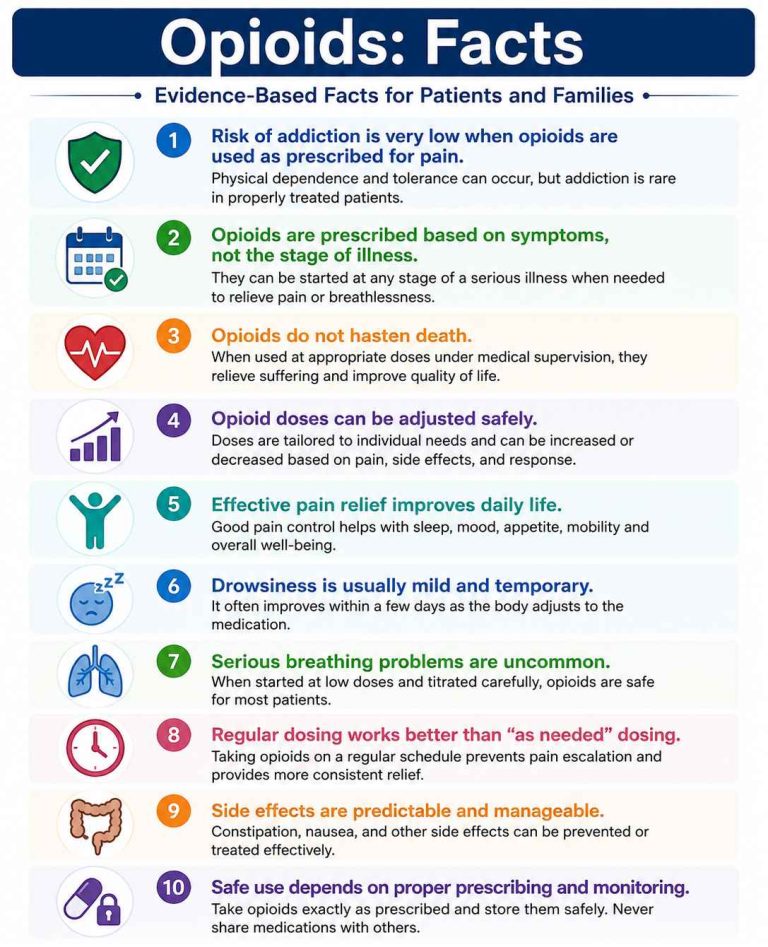
“Opioids always cause addiction.” – When opioids are prescribed appropriately for pain or refractory dyspnea in palliative care and used under medical supervision, the risk of addiction is low. Physical dependence and tolerance are expected physiological responses and are different from addiction.
“Starting morphine means I am dying.” – Morphine is prescribed based on the severity of symptoms, not because a patient is approaching the end of life. It may be started at any stage of a serious illness when clinically indicated.
“Morphine hastens death.” – When prescribed at appropriate doses and titrated carefully, opioids relieve pain and breathlessness without shortening life. Their goal is to improve comfort and quality of life.
“If I start opioids now, they won’t work later.” – Opioid doses can be safely adjusted according to the patient’s changing needs. Starting treatment early does not prevent effective pain control in the future.
“Strong pain means I should tolerate it rather than take opioids.” – Uncontrolled pain can worsen physical function, sleep, mood, and quality of life. Effective pain management is an essential part of good medical care.
“Opioids always cause severe drowsiness.” – Mild drowsiness may occur initially but usually improves within a few days. Most patients remain alert and comfortable after appropriate dose adjustment.
“Respiratory depression is inevitable.” – Clinically significant respiratory depression is uncommon when opioids are initiated at appropriate doses and titrated gradually under medical supervision.
“Opioids should only be taken when pain becomes unbearable.” – Regularly scheduled opioids maintain consistent pain control and prevent pain escalation, providing better symptom relief than waiting until pain becomes several.
Opioid phobia remains a significant barrier to effective pain and symptom management in palliative care. Misconceptions about addiction, respiratory depression, tolerance, and end-of-life care often prevent patients and families from accepting treatments that can substantially improve comfort and quality of life. Left unaddressed, these fears may result in unnecessary suffering, poor symptom control, and reduced adherence to prescribed therapy.
Overcoming opioid phobia requires compassionate communication, evidence-based education, and shared decision-making. By addressing myths, explaining the safe and appropriate use of opioids, and involving patients and caregivers in treatment decisions, healthcare professionals can build trust and confidence in opioid therapy.
Ultimately, opioids should be viewed not as a symbol of hopelessness, but as an essential tool for relieving suffering and preserving dignity. When prescribed appropriately, monitored carefully, and used responsibly, opioids remain one of the safest and most effective medications for managing pain and other distressing symptoms in palliative care.


I am a physician specialized in Palliative Medicine (MD) with a strong commitment to improving the quality of life for patients with life-limiting illnesses. My clinical focus is on comprehensive symptom management, holistic patient care, and psychosocial support for patients and families.Beyond clinical practice, I am deeply interested in palliative care education, research, and integrating evidence-based practices into patient-centered care. I aim to contribute to the growth of palliative care services, raise awareness about end-of-life issues, and advocate for a more compassionate healthcare system.