Need for Medical Equipment in Home-Based Palliative Care
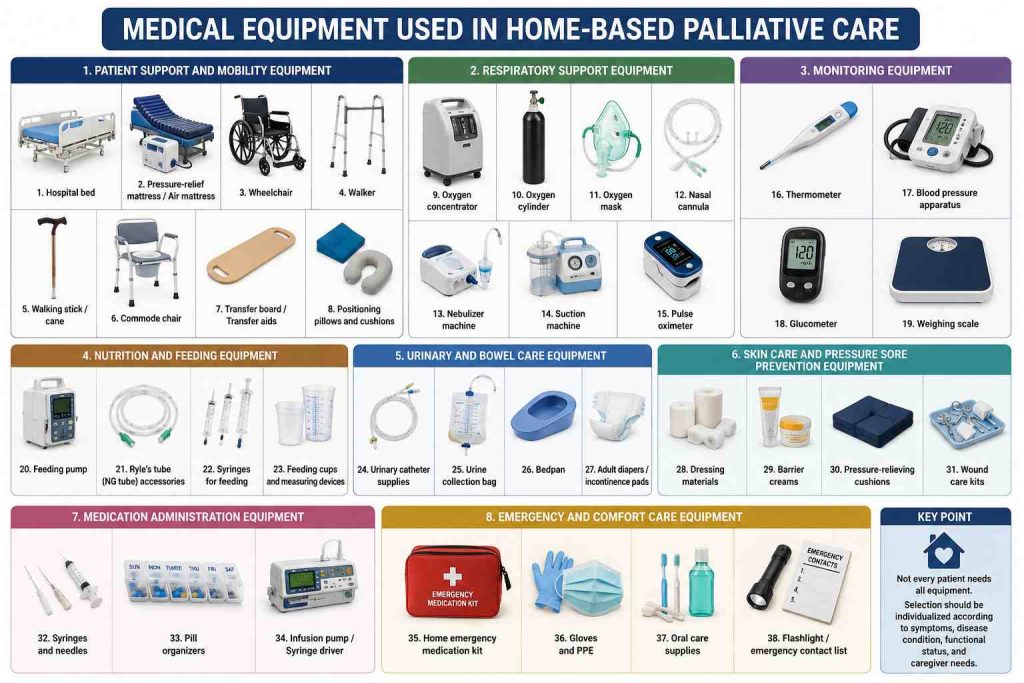
Medical equipment is an essential component of home-based palliative care because it helps provide safe, effective, and comfortable care to patients with advanced illnesses. As disease progresses, patients often experience reduced mobility, breathlessness, pain, weakness, and increasing dependence on caregivers. Appropriate medical equipment can help manage these challenges by improving symptom control, supporting daily activities, and reducing physical strain on both patients and caregivers. Equipment such as hospital beds, oxygen systems, wheelchairs, suction devices, and mobility aids can enhance patient comfort and maintain dignity while allowing care to be delivered effectively at home. In addition, the availability of appropriate equipment may reduce unnecessary hospital visits and improve the overall quality of life.
Key Needs for Medical Equipment
- Improve patient comfort and positioning
- Assist in pain and symptom management
- Support mobility and physical function
- Prevent complications such as pressure sores and falls
- Facilitate feeding, hygiene, and daily activities
- Reduce caregiver physical strain
- Improve safety within the home environment
- Reduce unnecessary hospital admissions
- Enhance patient dignity and independence
- Support end-of-life care at home
The selection of medical equipment in home-based palliative care should be individualized according to the patient’s clinical condition, functional status, symptom burden, and care requirements. Appropriate equipment selection improves comfort, safety, and quality of life while minimizing caregiver burden. Practical factors such as home environment, availability of resources, cost, and caregiver capability should also be considered before choosing equipment.
Factors Affecting Equipment Selection
Although medical equipment significantly improves patient care and comfort in home-based palliative care, several challenges may limit its effective use. Access to equipment may be restricted by financial constraints, limited availability, or lack of awareness. Patients and caregivers may also face difficulties in handling equipment correctly, especially when training is inadequate. Technical issues, maintenance requirements, and home infrastructure limitations can further complicate care delivery. Addressing these challenges through proper education and support is essential for safe and effective use of medical devices at home.
Issues with home based equipments
- High cost of medical equipment
- Limited availability in certain areas
- Lack of caregiver training
- Difficulty in operating equipment
- Need for maintenance and servicing
- Power supply interruptions
- Space limitations at home
- Fear or anxiety related to equipment use
- Equipment malfunction or technical issues
- Infection control and hygiene concerns
What are the benefits of home based equipments – The availability of appropriate medical equipment can significantly improve the quality and effectiveness of home-based palliative care. Properly selected equipment enhances patient comfort, supports symptom management, facilitates daily care activities, and promotes safety within the home environment. It also reduces physical and emotional burden on caregivers by making care delivery easier and more efficient. Ultimately, the use of suitable equipment helps patients maintain dignity, independence, and quality of life while remaining in the comfort of their own homes.
- Improves patient comfort and positioning
- Enhances symptom control
- Supports mobility and independence
- Prevents complications such as pressure ulcers and falls
- Facilitates nursing and personal care
- Reduces caregiver burden and physical strain
- Improves patient safety
- Promotes dignity and quality of life
- Enables care to be delivered at home effectively
- Reduces unnecessary hospital visits and admissions
- Improves continuity of care
- Supports end-of-life care at home
Conclusion
Medical equipment is a vital component of home-based palliative care, helping patients receive safe, comfortable, and effective care in their own homes. The selection of appropriate equipment should be individualized according to patient needs, symptom burden, functional status, and available resources. When combined with caregiver training and professional support, medical equipment can greatly enhance comfort, reduce complications, and improve the overall quality of life for both patients and their families.