The Kerala Model: What India Can Learn from Community-Based Palliative Care
Introduction
India faces a growing burden of chronic illnesses, cancer, organ failure, neurodegenerative diseases, and an ageing population, leading to an increasing need for palliative care. Despite this need, access to quality palliative care remains limited across much of the country because of shortages of trained professionals, inadequate infrastructure, and unequal distribution of healthcare resources. Innovative, sustainable, and community-oriented models are therefore essential to bridge this gap.
The Kerala Model of Community-Based Palliative Care is internationally recognized as one of the most successful public health approaches to palliative care. Built on the principles of community participation, volunteerism, primary healthcare integration, and multidisciplinary collaboration, the model extends care beyond hospitals into patients’ homes. Trained volunteers, healthcare professionals, local self-government institutions, and non-governmental organizations work together to provide holistic care that addresses physical, psychological, social, and spiritual needs.
Rather than relying solely on specialist-led services, the Kerala Model empowers communities to actively participate in caring for people with life-limiting illnesses. This approach has improved accessibility, affordability, continuity of care, and family support, making Kerala a global example of effective community-based palliative care. As India seeks to expand palliative care services nationwide, the Kerala experience offers valuable lessons for developing equitable, patient-centered, and sustainable models of care.
Why Is the Kerala Model Important?
- Improves access to palliative care at the community level.
- Delivers home-based, patient-centered care.
- Encourages community participation and volunteerism.
- Integrates palliative care with primary healthcare.
- Reduces unnecessary hospital admissions.
- Improves quality of life for patients and caregivers.
- Provides a cost-effective and sustainable care model.
- Serves as a scalable framework for expanding palliative care across India.
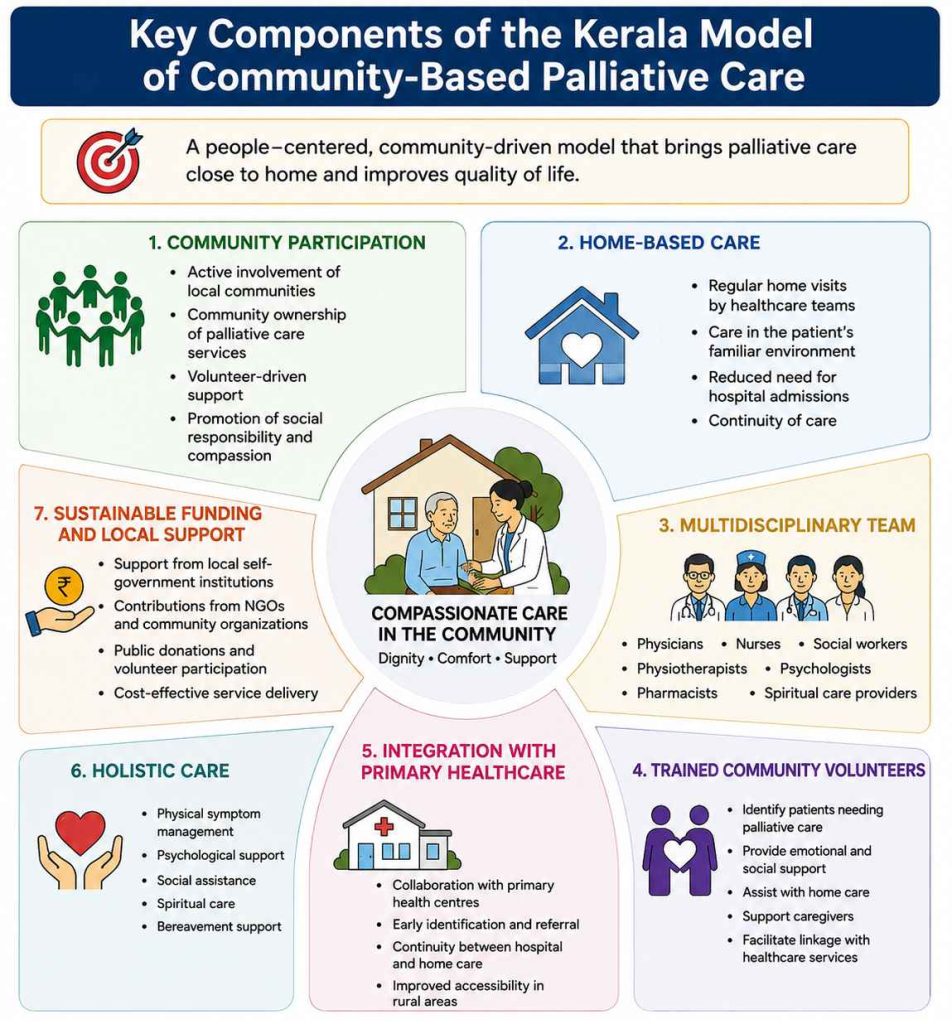
Key Components of the Kerala Model of Community-Based Palliative Care
The success of the Kerala Model lies in its integration of healthcare services with active community participation. Rather than relying exclusively on specialist palliative care teams, the model adopts a multidisciplinary, community-owned approach in which healthcare professionals, trained volunteers, local self-government institutions, and non-governmental organizations collaborate to provide comprehensive, home-based care. This decentralized system ensures that patients receive continuous, holistic support within their own communities.
- Community Participation
- Active involvement of local communities
- Community ownership of palliative care services
- Volunteer-driven support for patients and families
- Promotion of social responsibility and compassion
- Home-Based Care
- Regular home visits by healthcare teams
- Care delivered in the patient’s familiar environment
- Reduced need for hospital admissions
- Continuity of care
- Multidisciplinary Team
- Physicians
- Nurses
- Social workers
- Community volunteers
- Physiotherapists
- Psychologists
- Pharmacists
- Spiritual care providers
- Trained Community Volunteers
- Identify patients needing palliative care
- Provide emotional and social support
- Assist with home care
- Support caregivers
- Facilitate linkage with healthcare services
- Integration with Primary Healthcare
- Collaboration with primary health centres
- Early identification and referral
- Continuity between hospital and home care
- Improved accessibility in rural areas
- Holistic Care
- Physical symptom management
- Psychological support
- Social assistance
- Spiritual care
- Bereavement support
- Sustainable Funding and Local Support
- Support from local self-government institutions
- Contributions from NGOs and community organizations
- Public donations and volunteer participation
- Cost-effective service delivery
The Kerala Model succeeds because it shifts palliative care from a hospital-centered service to a community-owned, home-based system, ensuring accessible, holistic, and sustainable care for patients with serious illnesses.
The Kerala Model has demonstrated that community participation can substantially improve access to palliative care, even in resource-limited settings. By integrating home-based services with primary healthcare and trained volunteers, the model has enhanced symptom control, reduced unnecessary hospitalizations, strengthened family support, and improved the quality of life of patients with life-limiting illnesses. Its success has gained international recognition and serves as a benchmark for community-based palliative care.
Major Achievements
Improved Access
- Expanded palliative care services across Kerala.
- Increased availability of home-based care.
- Better access for rural and underserved populations.
Better Patient Outcomes
- Improved symptom control.
- Enhanced quality of life.
- Greater patient satisfaction.
- Respect for patient autonomy and dignity.
Support for Families
- Reduced caregiver burden.
- Improved caregiver education and confidence.
- Emotional and psychosocial support.
- Bereavement services.
Healthcare System Benefits
- Fewer unnecessary hospital admissions.
- Reduced emergency department visits.
- Better continuity of care.
- More efficient use of healthcare resources.
Community Benefits
- Strong volunteer participation.
- Increased public awareness about palliative care.
- Greater social responsibility and compassion.
- Sustainable, community-owned healthcare initiatives.
Global Recognition
- Internationally recognized as a successful public health model.
- Cited by the World Health Organization as an example of community-based palliative care.
- Adapted and studied by several countries seeking to improve palliative care access.
The Kerala Model demonstrates that compassionate, community-driven palliative care can improve patient outcomes, strengthen families, reduce healthcare costs, and serve as a scalable model for expanding palliative care across India and beyond.
Conclusion
The Kerala Model has redefined palliative care by demonstrating that compassionate, high-quality care can be delivered through strong community participation, home-based services, and integration with primary healthcare. Its success highlights that effective palliative care is not solely dependent on specialist centers but can be achieved by empowering local communities, trained volunteers, healthcare professionals, and policymakers to work together.
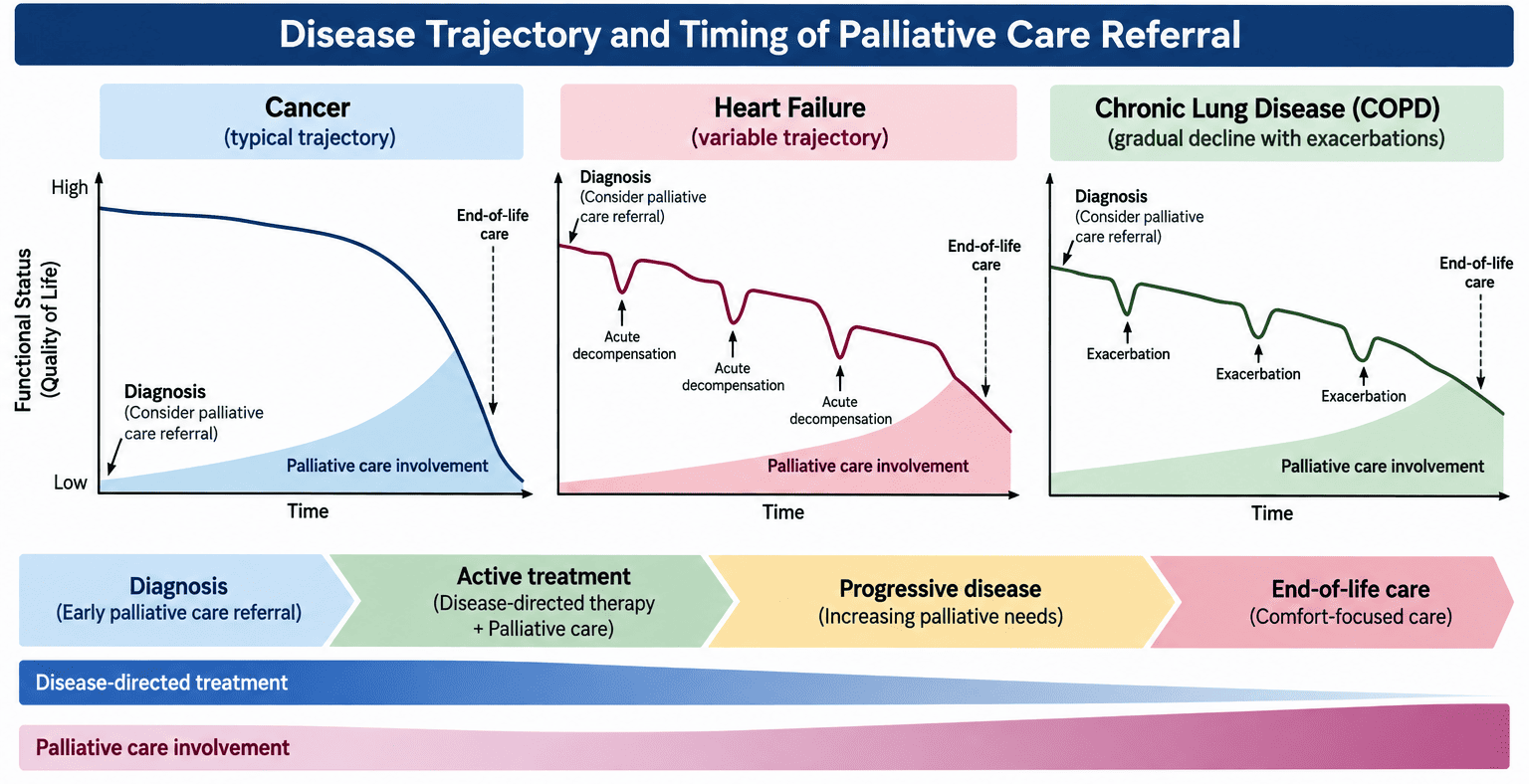
As India faces an increasing burden of chronic and life-limiting illnesses, the principles of the Kerala Model provide a practical and scalable framework for expanding equitable palliative care nationwide. By strengthening community ownership, promoting early integration of palliative care, and ensuring holistic, patient-centered support, this model can help bridge the existing gaps in access and improve the quality of life for millions of patients and their families.