A hip fracture in an older adult is rarely just an orthopaedic event. It is usually the result of a fall, on a background of osteoporosis, frailty, sarcopenia and multimorbidity — and it frequently marks a turning point in that person’s life.
Mortality in the year after a hip fracture is substantial, commonly reported in the range of 20–30%. Of those who survive, many never regain their previous level of mobility or independence, and a significant proportion require a higher level of care than before. In India, where hip fractures occur at a younger age than in many Western populations and where post-acute rehabilitation services are unevenly available, the burden on families is considerable.
Surgery fixes the bone. Rehabilitation determines whether the patient walks again. That is why the PM&R physician has a role at every stage of the hip fracture pathway — not only after the patient leaves the orthopaedic ward.
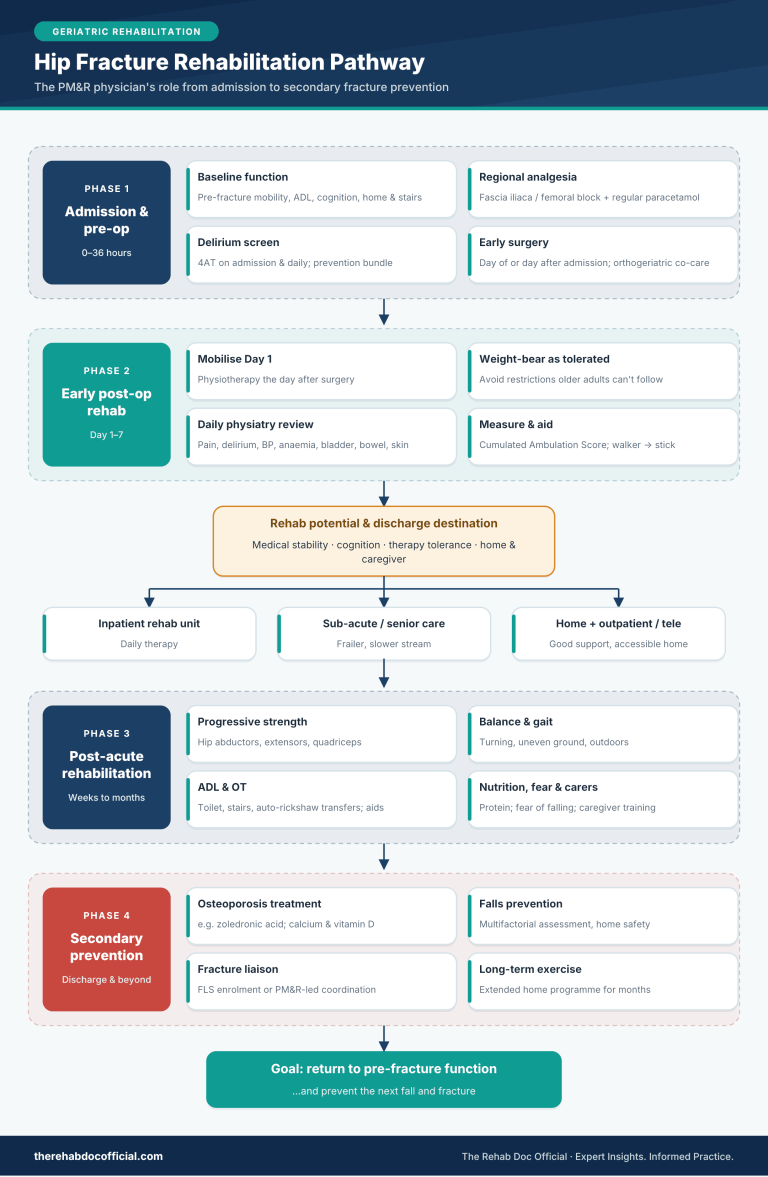
The physiatrist’s involvement should ideally begin before surgery.
Inadequate pain control delays mobilisation and is a major contributor to delirium. Regional analgesia — such as a fascia iliaca compartment block or femoral nerve block — reduces opioid requirements and is recommended in addition to regular paracetamol. Many physiatrists are skilled in ultrasound-guided blocks and can contribute directly.
Delirium affects a large proportion of older adults with hip fracture and is associated with poorer functional recovery, longer stay and higher mortality. Screen with the 4AT on admission and regularly thereafter. Prevention includes adequate analgesia, hydration, avoidance of deliriogenic drugs, orientation, glasses and hearing aids in place, sleep hygiene and early mobilisation.
The patient should be assessed and mobilised by a physiotherapist on the day after surgery, unless medically contraindicated. Early mobilisation is associated with better functional recovery and fewer complications — pneumonia, pressure injuries, venous thromboembolism and deconditioning.
Surgery should be designed to allow full weight-bearing as tolerated. Older adults usually cannot comply with partial or non-weight-bearing restrictions, and imposing them effectively immobilises the patient. The physiatrist should clarify weight-bearing status with the orthopaedic surgeon early.
Track progress with simple, reproducible measures such as the Cumulated Ambulation Score (CAS) in the first post-operative days, then Timed Up and Go, gait speed and Barthel Index as recovery progresses.
This is where the physiatrist’s leadership is most visible. The choice of setting depends on medical stability, cognition, tolerance for therapy and home circumstances:
Recovery continues well beyond discharge. Evidence suggests that extended, progressive exercise programmes continued for several months after hip fracture improve mobility and physical function. Discharge should be the start of community rehabilitation, not the end of therapy.
A hip fracture is a strong predictor of further fractures. Every patient should leave the pathway with a plan to reduce that risk.
Patients with a hip fracture should, in general, be considered for osteoporosis treatment without waiting for a DXA scan. In the HORIZON Recurrent Fracture Trial, intravenous zoledronic acid given within 90 days after hip fracture repair reduced new clinical fractures and was associated with lower mortality. Ensure vitamin D and calcium repletion before and alongside antiresorptive therapy. The physiatrist should confirm that treatment has been started — or that a referral has been made — before discharge.
Every hip fracture patient is, by definition, at high risk of falls. Apply a multifactorial falls assessment: medication review, vision, orthostatic blood pressure, home hazards, footwear, continence and a long-term balance and strength programme.
Where available, enrolment in a Fracture Liaison Service improves the identification and treatment of osteoporosis after fragility fracture. In centres without one, the PM&R service can take on this coordinating role.
Families frequently ask, “Will she walk again like before?” The answer depends heavily on pre-fracture mobility, cognition and frailty. Honest, early discussion — with clear functional milestones — helps families plan and reduces distress. Where full recovery is unlikely, goals may shift to safe indoor walking with an aid, independent toileting, or safe wheelchair transfers with a trained caregiver. These are meaningful outcomes and should be presented as such.

As the Consultant and Incharge of the NeuroRehabilitation and Musculoskeletal & Sports Rehab Units at Kauvery hospitals Bangalore & Hosur, I lead and empower a diverse team of specialists—including physiotherapists, occupational therapists, speech & swallow therapists, and clinical psychologists, Rehabilitation Nurses—to provide patient-centered care and achieve outstanding results.