Palliative Approaches in End-Stage Heart Failure
Introduction
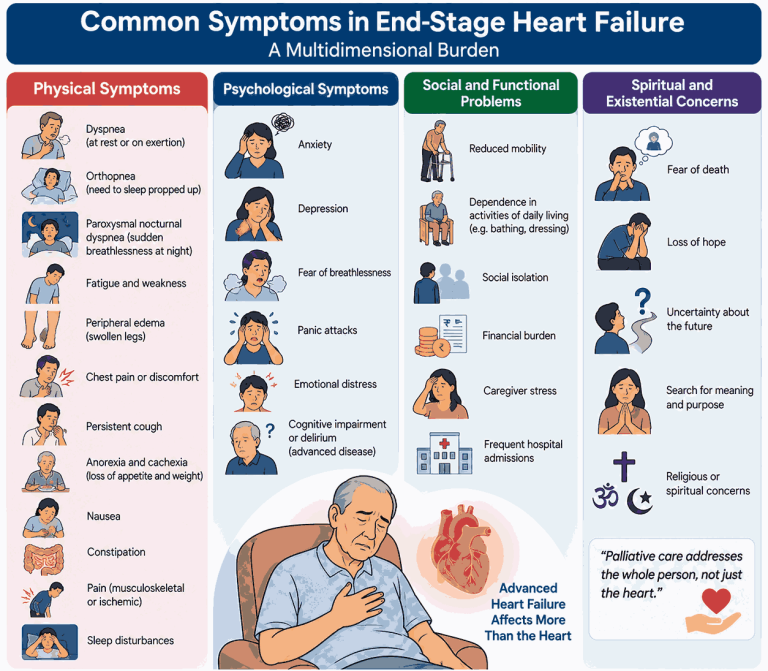
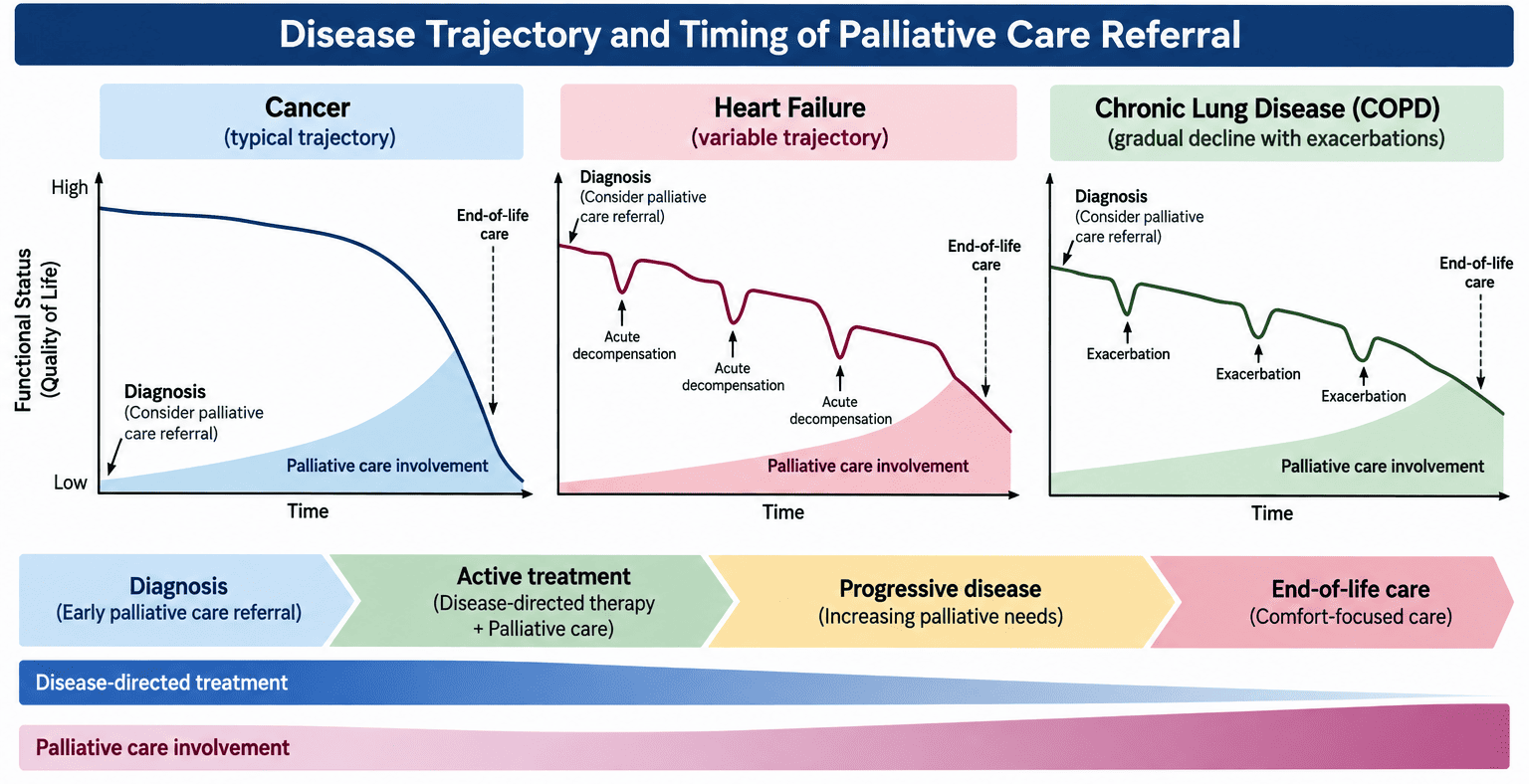
Heart failure is a progressive, life-limiting syndrome characterized by recurrent episodes of clinical deterioration, high symptom burden, frequent hospitalizations, and reduced quality of life. Patients with end-stage heart failure often experience persistent dyspnea, fatigue, pain, edema, anxiety, depression, and progressive functional decline despite optimal guideline-directed medical therapy. Unlike many malignancies, the disease trajectory of heart failure is often unpredictable, making timely integration of palliative care particularly important.
Palliative care is an essential component of comprehensive heart failure management and should be introduced alongside disease-directed therapies based on patient needs rather than prognosis alone. It focuses on relieving physical symptoms, addressing psychological, social, and spiritual distress, facilitating shared decision-making, and supporting advance care planning. Palliative care also helps patients and families navigate complex treatment decisions, including device deactivation, hospitalization, and end-of-life care.
Importantly, palliative care does not replace active heart failure treatment. Instead, it complements standard medical management by prioritizing comfort, preserving dignity, enhancing quality of life, and ensuring that care aligns with the patient’s goals and preferences throughout the course of advanced disease.
Palliative care should be considered throughout the course of advanced heart failure and should be introduced according to patient needs rather than prognosis alone. Referral is appropriate when patients experience persistent symptoms, repeated hospitalizations, progressive functional decline, or complex medical and psychosocial needs despite optimal heart failure therapy.
Clinical Situations Requiring Palliative Care
- Persistent Refractory Symptoms
- Dyspnea at rest or minimal exertion
- Fatigue and weakness
- Pain or discomfort
- Peripheral edema
- Persistent cough
- Anorexia and cachexia
- Advanced Heart Failure
- NYHA Class III or IV symptoms
- End-stage (Stage D) heart failure
- Poor response to guideline-directed medical therapy
- Recurrent Hospitalizations
- Frequent admissions for heart failure exacerbations
- Repeated emergency department visits
- Recurrent episodes of acute decompensation
- Progressive Functional Decline
- Reduced mobility
- Dependence in activities of daily living
- Frailty
- Reduced exercise tolerance
- Complex Treatment Decisions
- LVAD or heart transplant not feasible
- Implantable cardioverter-defibrillator (ICD) deactivation
- Decisions regarding inotropes or mechanical circulatory support
- Transition to comfort-focused care
- Psychological and Social Distress
- Anxiety and depression
- Fear of disease progression
- Caregiver burden
- Financial or social challenges
- Spiritual or existential distress
- Advance Care Planning
- Discussion of goals of care
- Advance directives
- Resuscitation (DNR) decisions
- Preferred place of care and end-of-life planning
Palliative care should be integrated early in patients with advanced heart failure who have persistent symptoms, recurrent hospitalizations, functional decline, or complex decision-making needs, ensuring that care remains aligned with the patient’s goals, comfort, and quality of life.
Symptom Management in End-Stage Heart Failure – Symptom management is the cornerstone of palliative care in end-stage heart failure. The primary goals are to relieve distressing symptoms, optimize functional status, and improve quality of life while continuing appropriate disease-modifying therapies whenever beneficial. Management should combine pharmacological treatment, non-pharmacological interventions, and regular reassessment according to patient goals and clinical status.
Early, compassionate communication and advance care planning ensure that patients with end-stage heart failure receive care consistent with their values, minimize unwanted interventions, and maintain comfort, dignity, and quality of life throughout the course of illness.
Deprescribing - Medications Commonly Considered for Discontinuation
- Statins(e.g., atorvastatin, rosuvastatin)
- Antiplatelet agentsfor primary prevention (e.g., aspirin, clopidogrel)
- Anticoagulants(e.g., warfarin, apixaban, rivaroxaban) if bleeding risk outweighs benefit and consistent with goals of care
- SGLT2 inhibitors(e.g., dapagliflozin, empagliflozin)
- ACE inhibitors/ARBs/ARNIs(e.g., enalapril, losartan, sacubitril/valsartan) if causing hypotension, renal dysfunction, or no longer providing symptomatic benefit
- Beta-blockers(e.g., bisoprolol, carvedilol, metoprolol) if causing symptomatic bradycardia, hypotension, or fatigue
- Mineralocorticoid receptor antagonists(e.g., spironolactone, eplerenone) if hyperkalemia or renal impairment develops
- Non-essential vitamin and mineral supplements
- Osteoporosis medications(e.g., alendronate, zoledronic acid)
- Preventive medicationswithout short-term symptomatic benefit (e.g., certain lipid-lowering or urate-lowering therapies)
Conclusion
Palliative care is an essential component of comprehensive management for patients with end-stage heart failure, addressing the complex physical, psychological, social, and spiritual challenges associated with advanced disease. Early integration of palliative care alongside guideline-directed medical therapy improves symptom control, facilitates shared decision-making, and enhances quality of life without replacing disease-directed treatment.
As heart failure progresses, care should gradually shift toward interventions that provide meaningful symptomatic benefit while avoiding unnecessary or burdensome treatments. Regular reassessment, individualized symptom management, advance care planning, and multidisciplinary collaboration ensure that treatment remains aligned with the patient’s values and goals. Ultimately, the aim of palliative care is to relieve suffering, preserve dignity, support families, and provide compassionate, patient-centered care throughout the course of advanced heart failure.